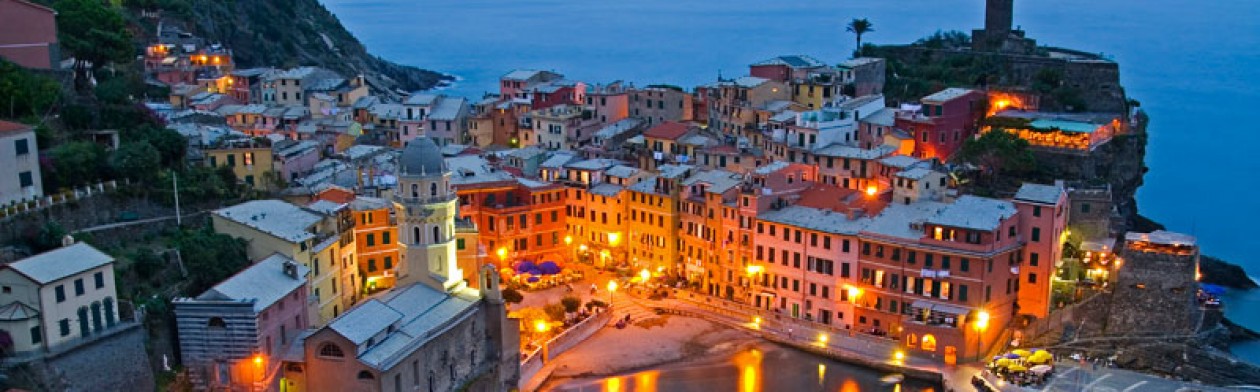
From a very loose, relaxed travel day to a very FULL day in Normandy. And what was, quite possibly, my favorite day of the entire trip.
We were up and out of the Novotel in Caen at a reasonably early hour. Beautiful, sunny day. The plan for the day had us heading northwest, hoping to visit Bayeux, the D-Day Museum, Omaha Beach, and the Normandy American Museum all in the same day. Rather ambitious.
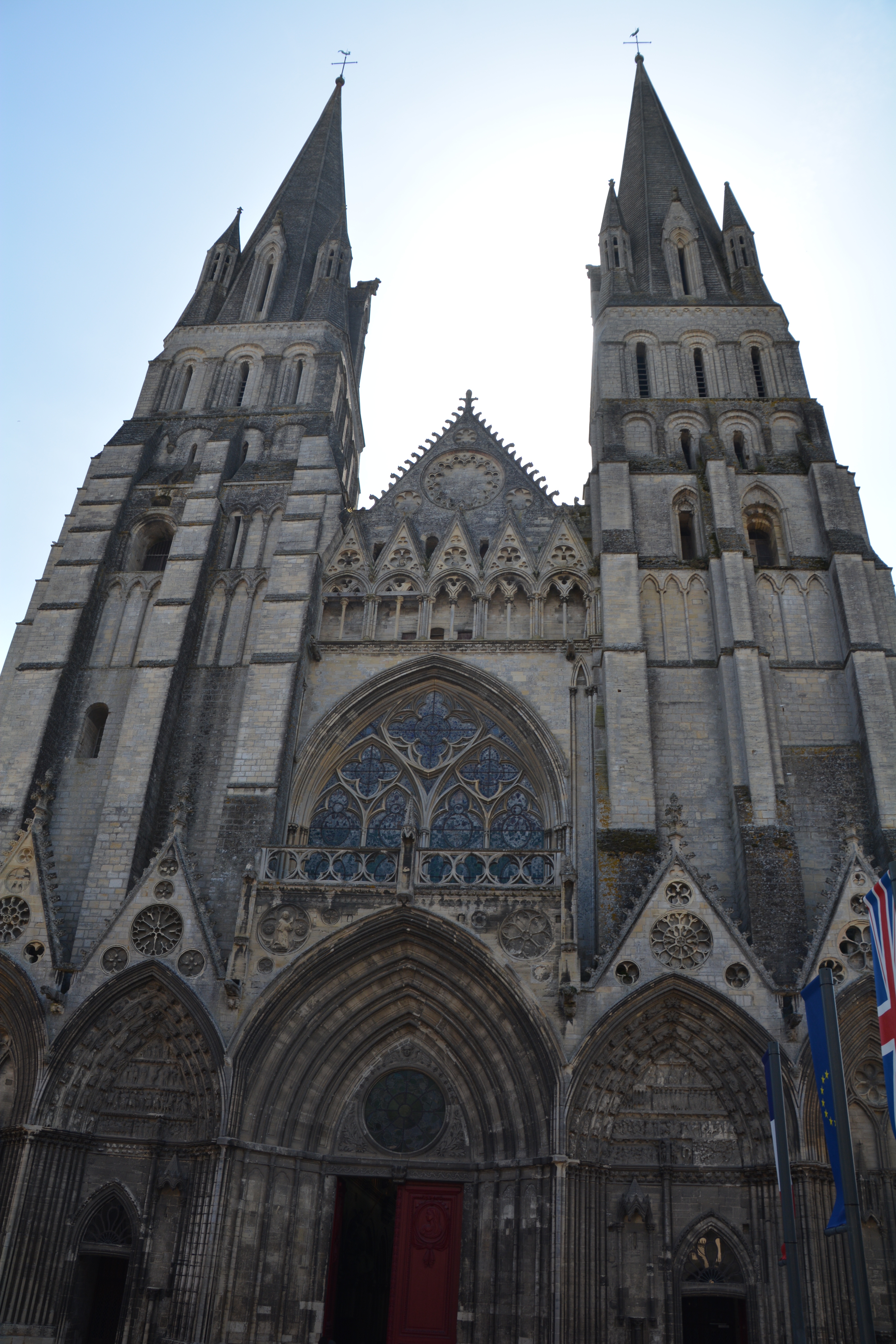
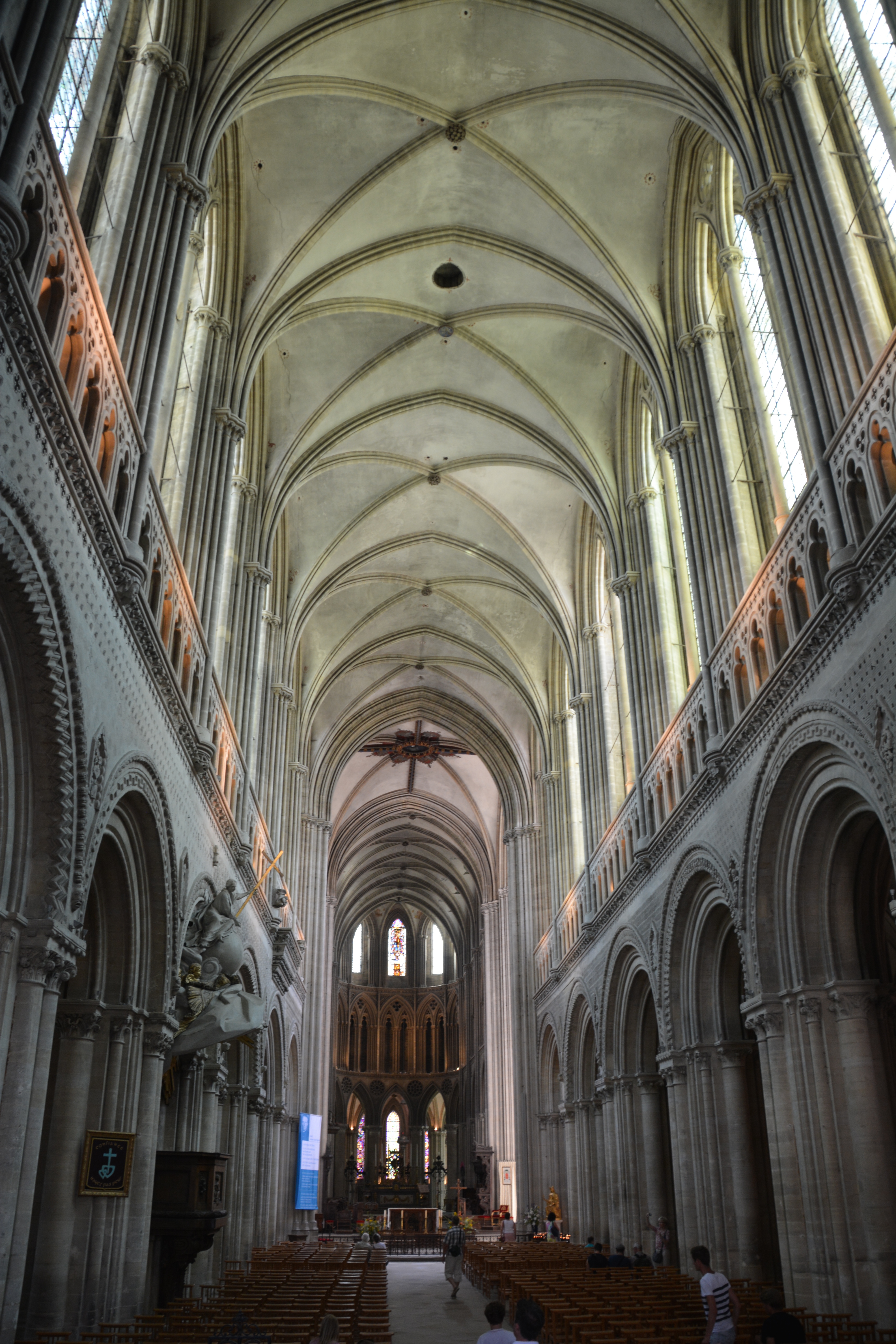
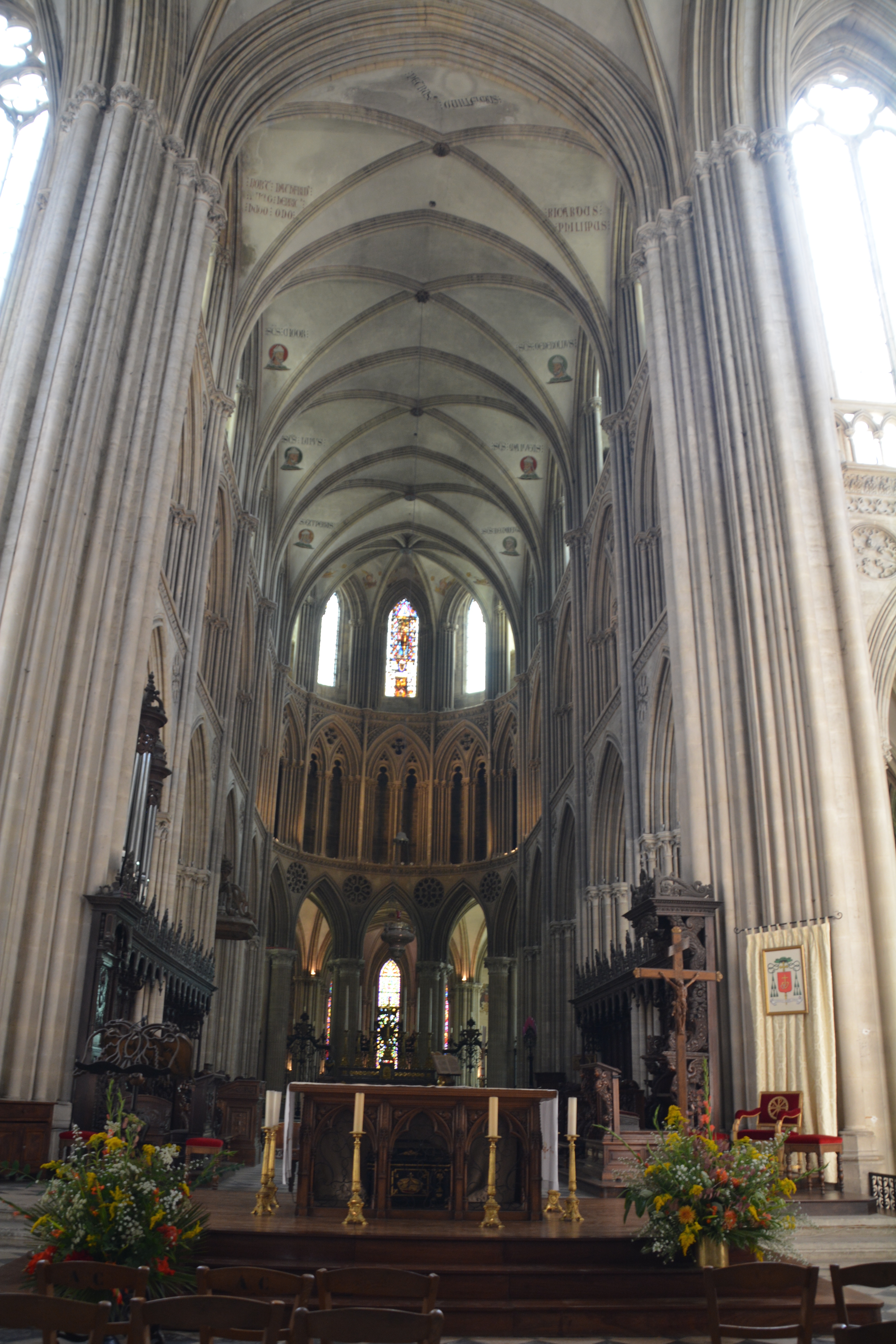
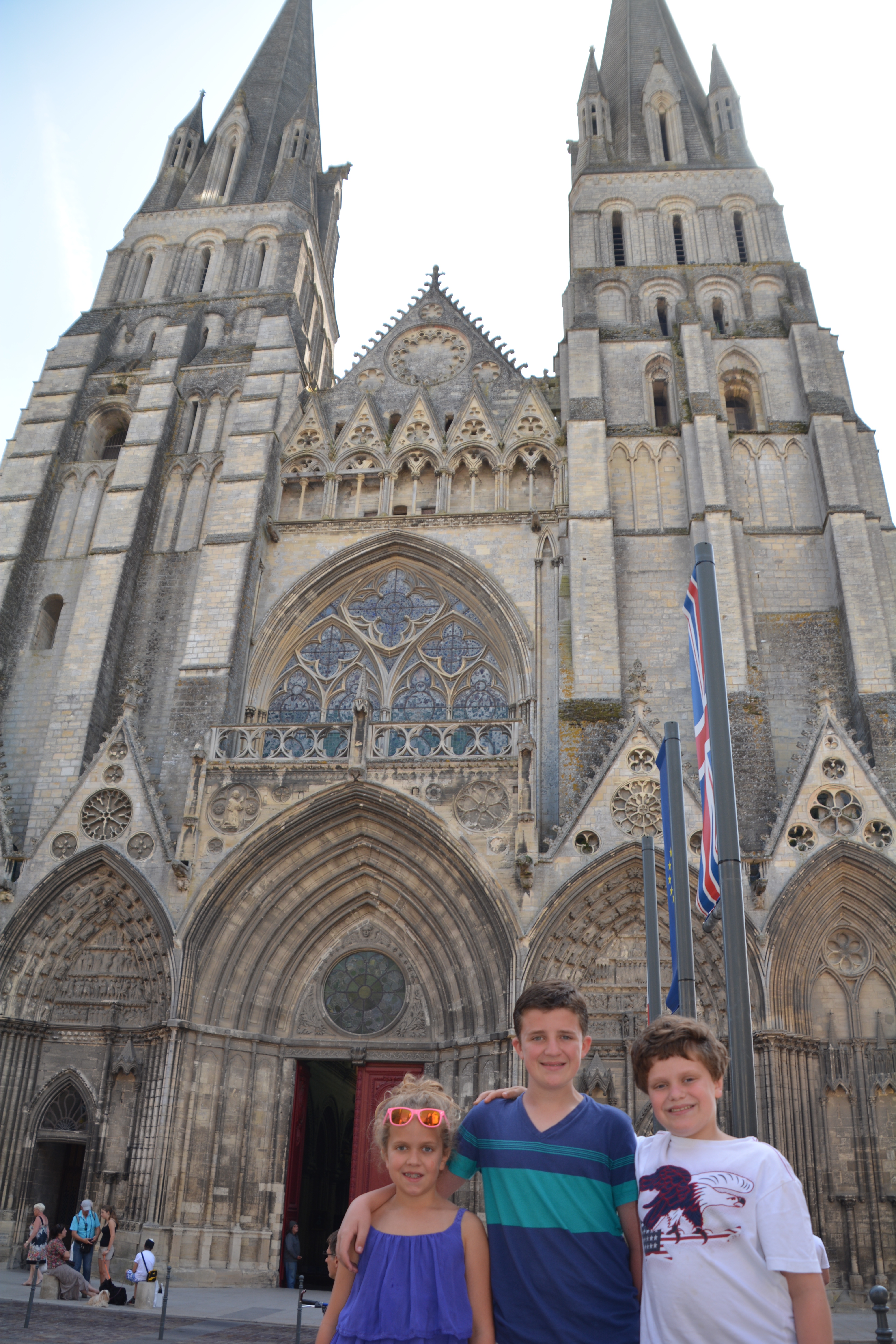
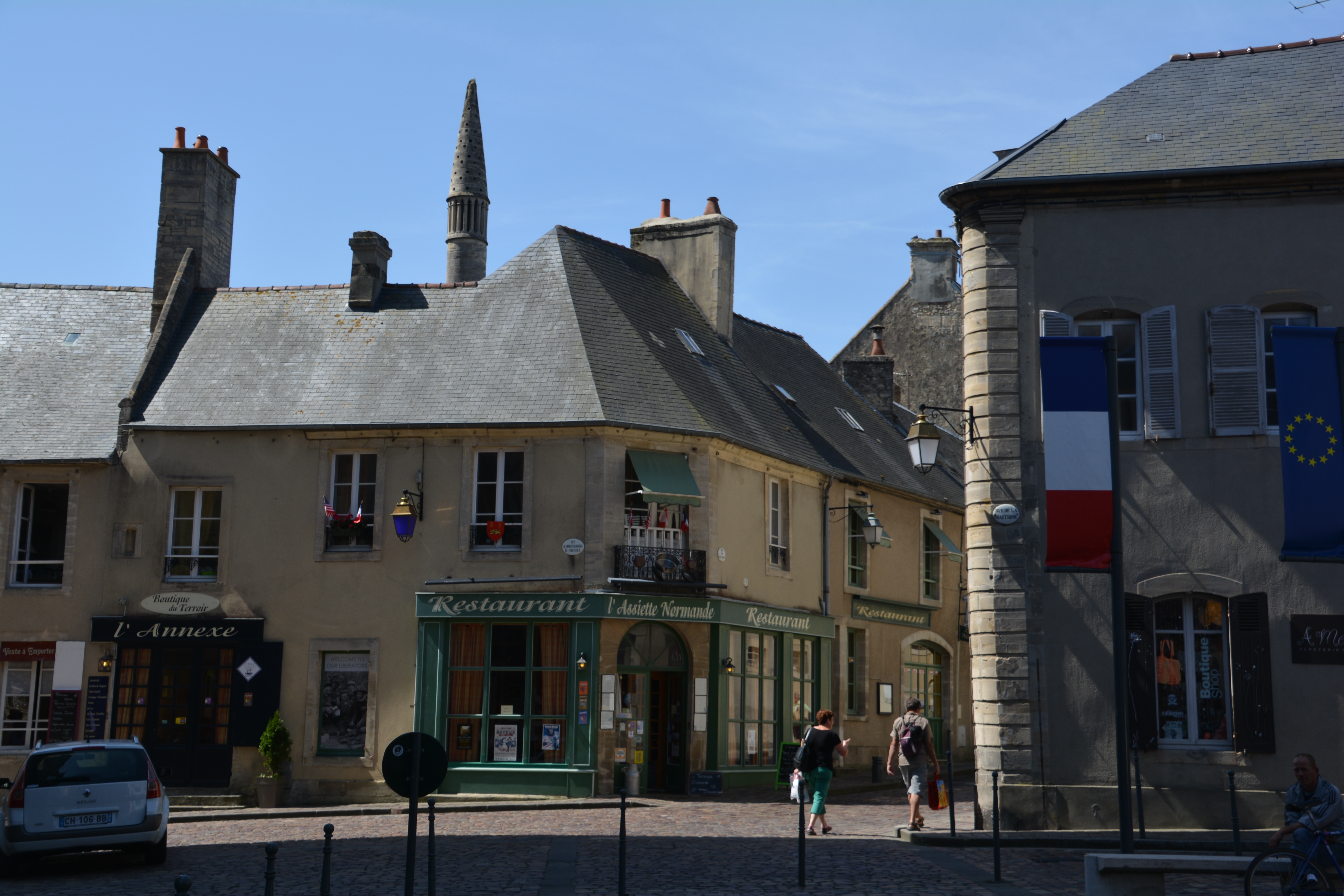
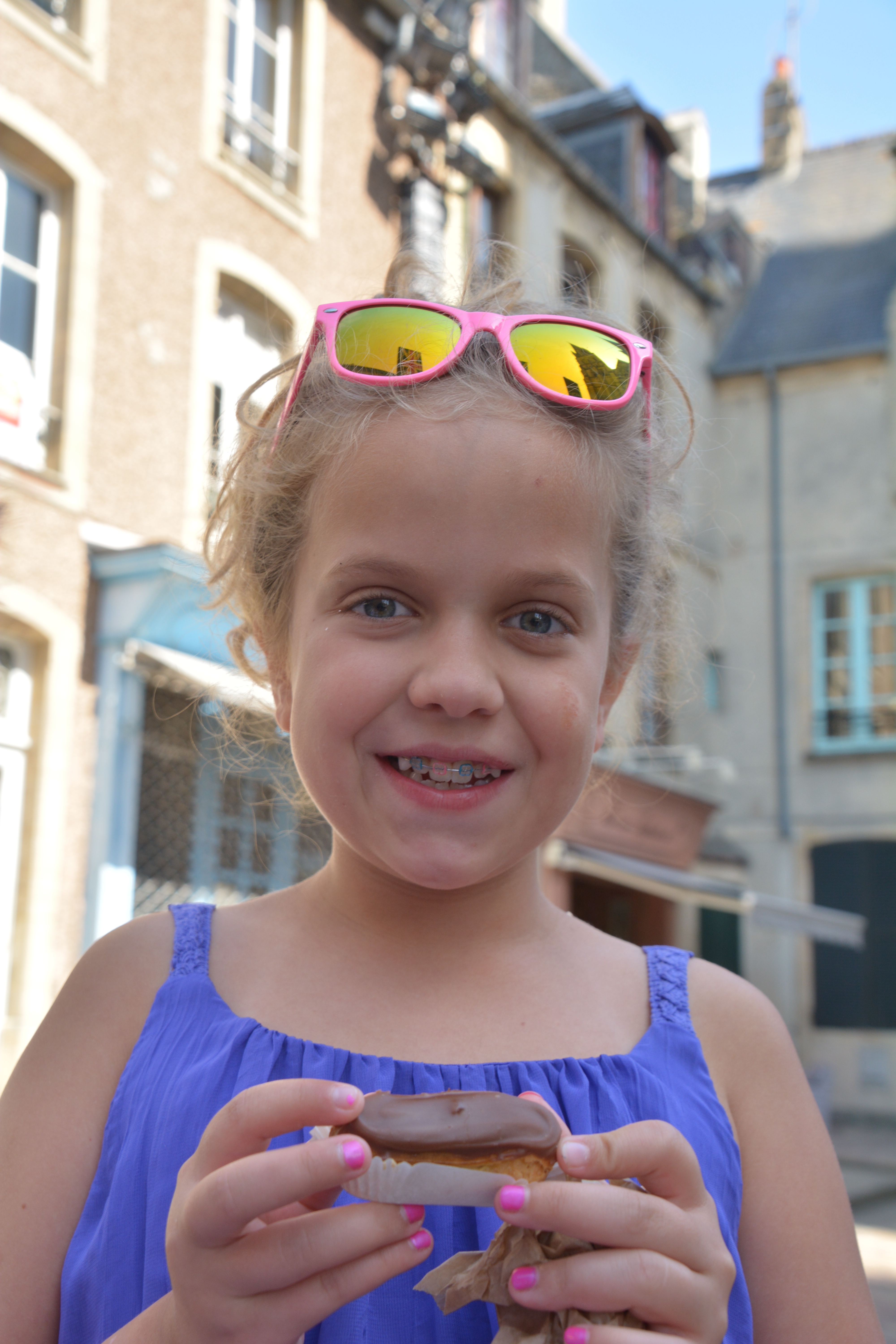
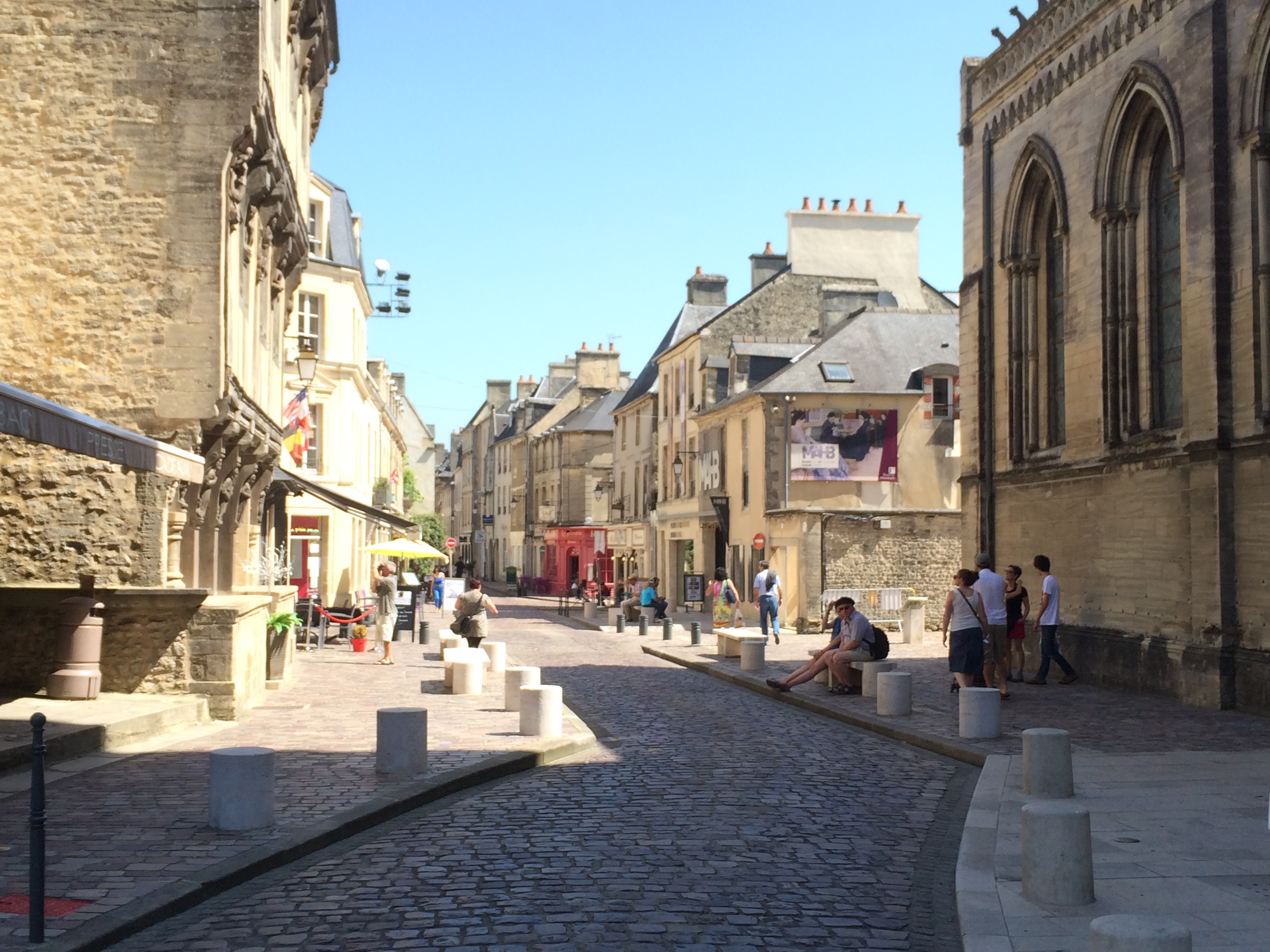
We stopped first in Bayeux. It’s a wonderful little town, quintessentially French, with a beautiful cathedral in the center. We bought pastries and strolled through town. Visited the cathedral – which was consecrated on July 14, 1077, and then rebuilt in the 12th century in a beautiful Gothic style. Drove back out through town, passing a beautiful old mill just outside of this small city.
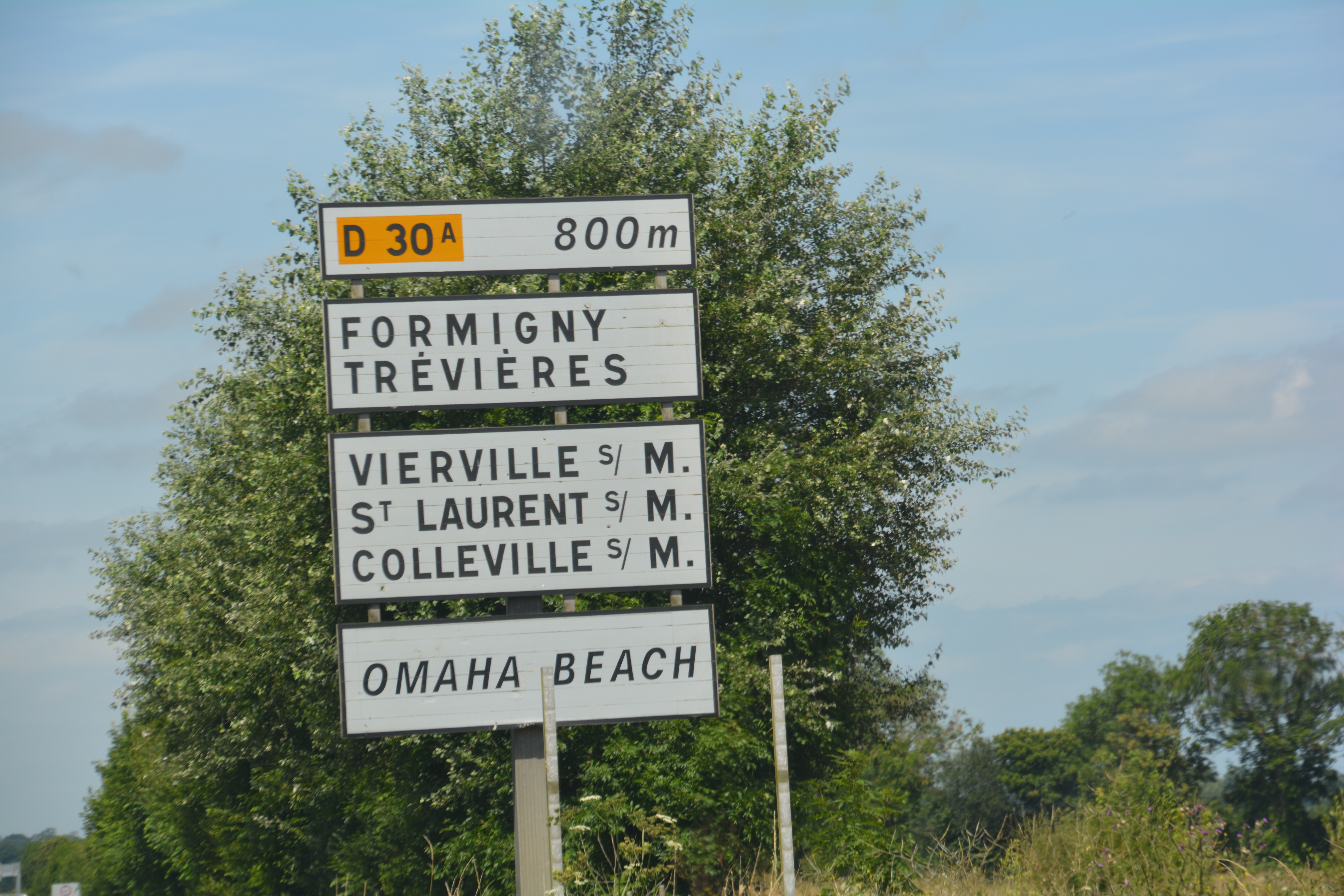
We continued northwest-ward, turning off the main motorway to head up to Omaha Beach. The small roads are lined with the famous Norman hedgerows, and I nearly wore my phone out taking pictures. These ancient hedgerows, which form property boundaries, were a critical element of the effort to wrestle control of Normandy away from the Nazis. The hedgerows, though a prominent feature of the Norman landscape, were completely overlooked by the leaders planning the Allied invasion. The troops simply couldn’t get through them, and the few openings in the hedgerows were pre-sighted by the Nazis – like walking into a trap. The Sherman tanks we used could occasionally drive OVER the mounds of hard dirt, but doing so would expose the vulnerable underside of the tanks to German anti-tank guns. But the ingenuity of the American soldiers prevailed, as they designed and built ways for the Shermans to bore holes in the dirt, which they would fill with explosives. Anyways, I thought it a fascinating detail of the war, so I took lots of pictures. Miles and miles of hedgerows, hundreds of years old, in beautiful emerald green.
The D-Day Museum was small but impressive, filled with items from the invasions, both donated and discovered. Lots of questions from the kids, lots of talk about what a daunting undertaking it all was. Neat films that told very personal stories of soldiers and nurses that survived.
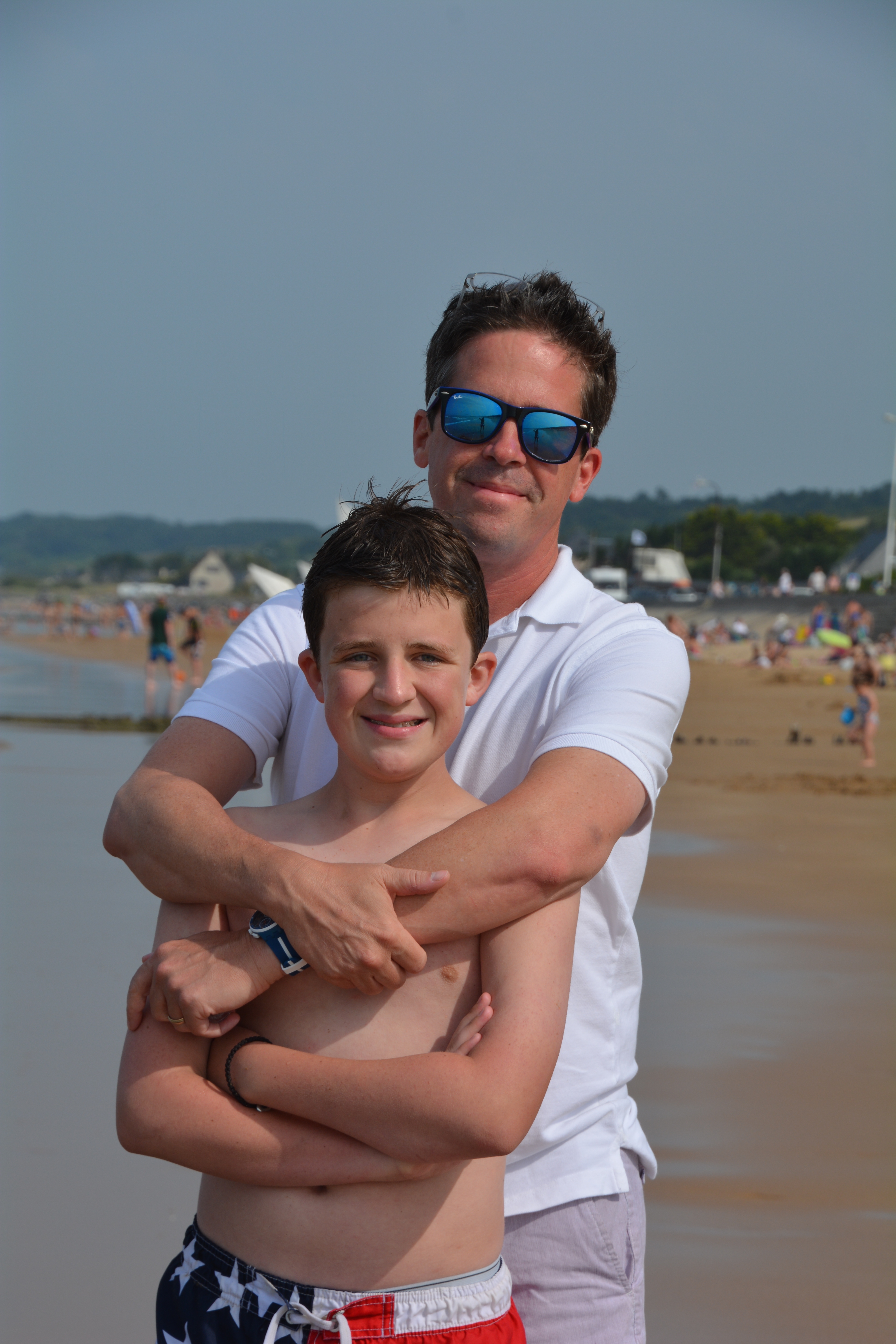
From there we drove a few short miles north, through the small town of Saint-Laurent-Sur-Mer, until we dead-ended at Omaha Beach, site of the first and largest invasion. There’s a beautiful monument there, and flags from the Allied nations flying, but other than that it is a beautiful, everyday beach. The weather was beautiful, so there were tons of people on the beach and in the water. We had lunch at a nearby cafe, then the kids changed in the car and we spent a few hours on the beach. We LINGERED, and it was wonderful.
Next it was back in the car for the short drive to the Normandy American Cemetery. Unfortunately, we had run out of time – we got there just as it closed. BUT, this gave us time to go see Pointe du Hoc.
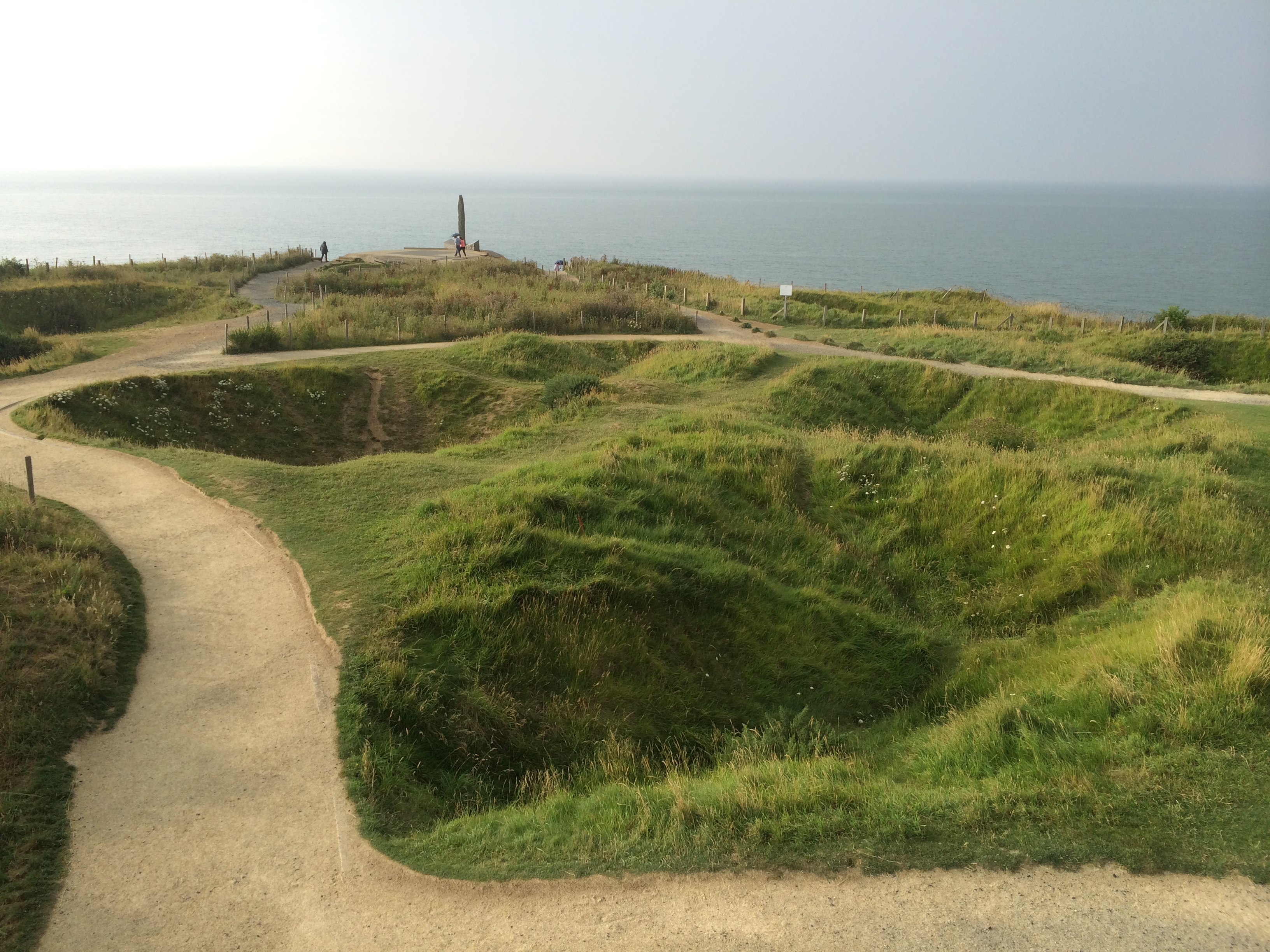
Pointe du Hoc, west of Omaha Beach, was a key strategic point for the Nazis, and Allied Target #1 for acquisition. A group of Army Rangers, led by Lt. Colonel James Rudder, was charged with overtaking the Nazi installation there, which was heavily entrenched with elaborate concrete bunkers, tunnels, and huge 155mm guns that the Allies were keen to knock out. The Nazis had never expected an attack from the shore, as Pointe du Hoc is at the top of a 100-foot cliff down to the beach below. But that’s exactly where the Rangers attacked. With grappling hooks, ropes and ladders, they fought and scrambled their way up the cliff while Nazi soldiers fired down on them from above. Of the roughly 200 Rangers making the assault, only 110 survived to the top of the cliff. But they quickly overtook the Nazi forces, captured the guns, and spent the next days in a desperate attempt to KEEP it until reinforcements arrived. Today, Pointe du Hoc is an eerie but impactful monument to the Allied efforts there. The landscape is still cratered from the bombings conducted ahead of the D-Day landing to soften up the enemy. The Nazi bunkers are there. You can walk to the edge and peer over the cliff that the Rangers somehow scaled. It was wonderful. We took our time, explored the bunkers and Pointe in a light rain, and read the many stories memorialized there.
Of course, this was the STUMBOS visiting a historic site, so it wasn’t without mishap or comedy. Ellis found himself a concrete bunker entrance to climb down into, thinking that, like all the others they’d explored, it would LEAD somewhere. But alas, it didn’t. And he was STUCK. It took both siblings and his mother to haul him out!
We stopped for dinner in Bayeux on our way back to Caen. Good dinner. GREAT cider. And to top it off, “Tekila”, a LATIN REGGAE band, was playing downstairs. Of course!
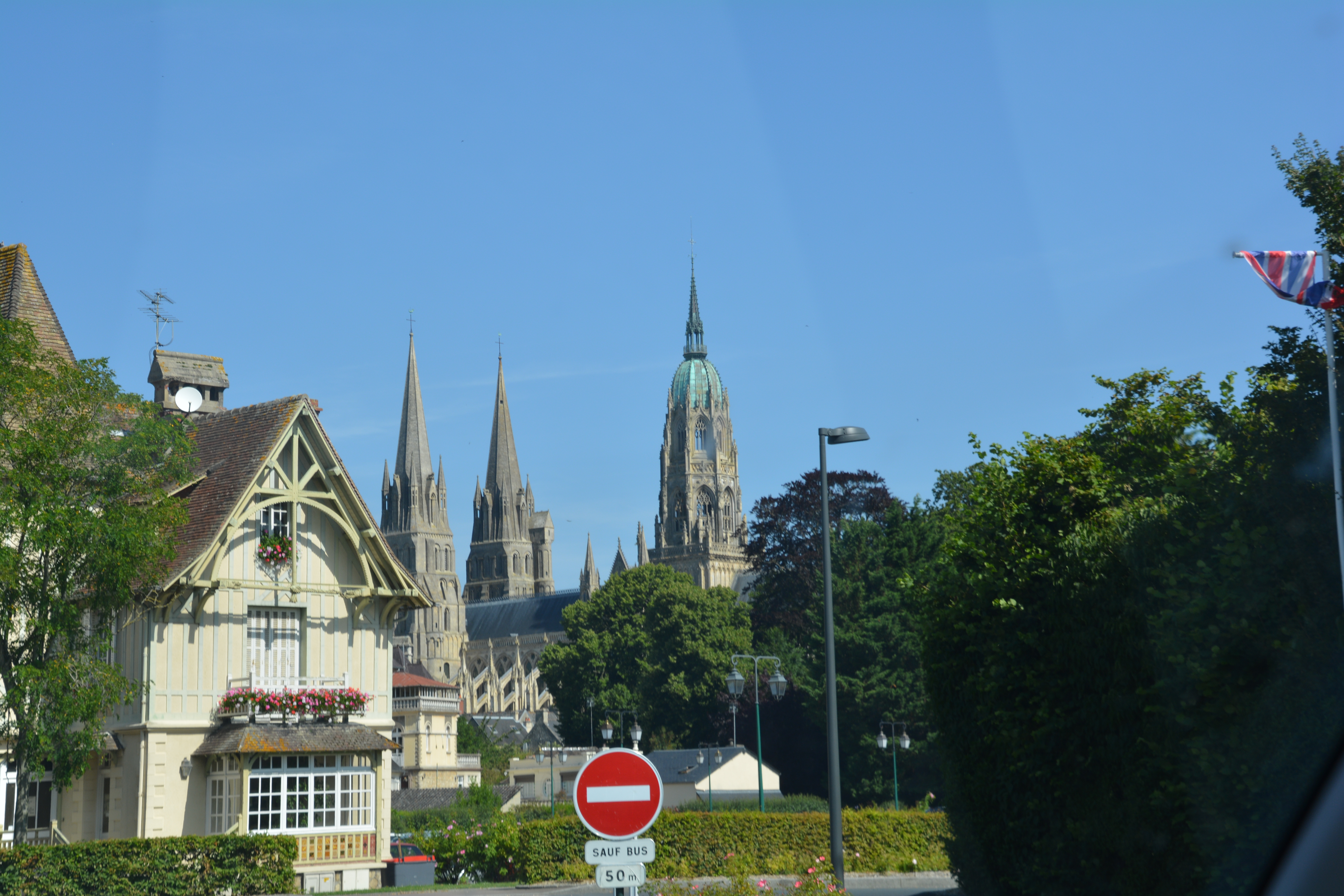
Arriving in Bayeux
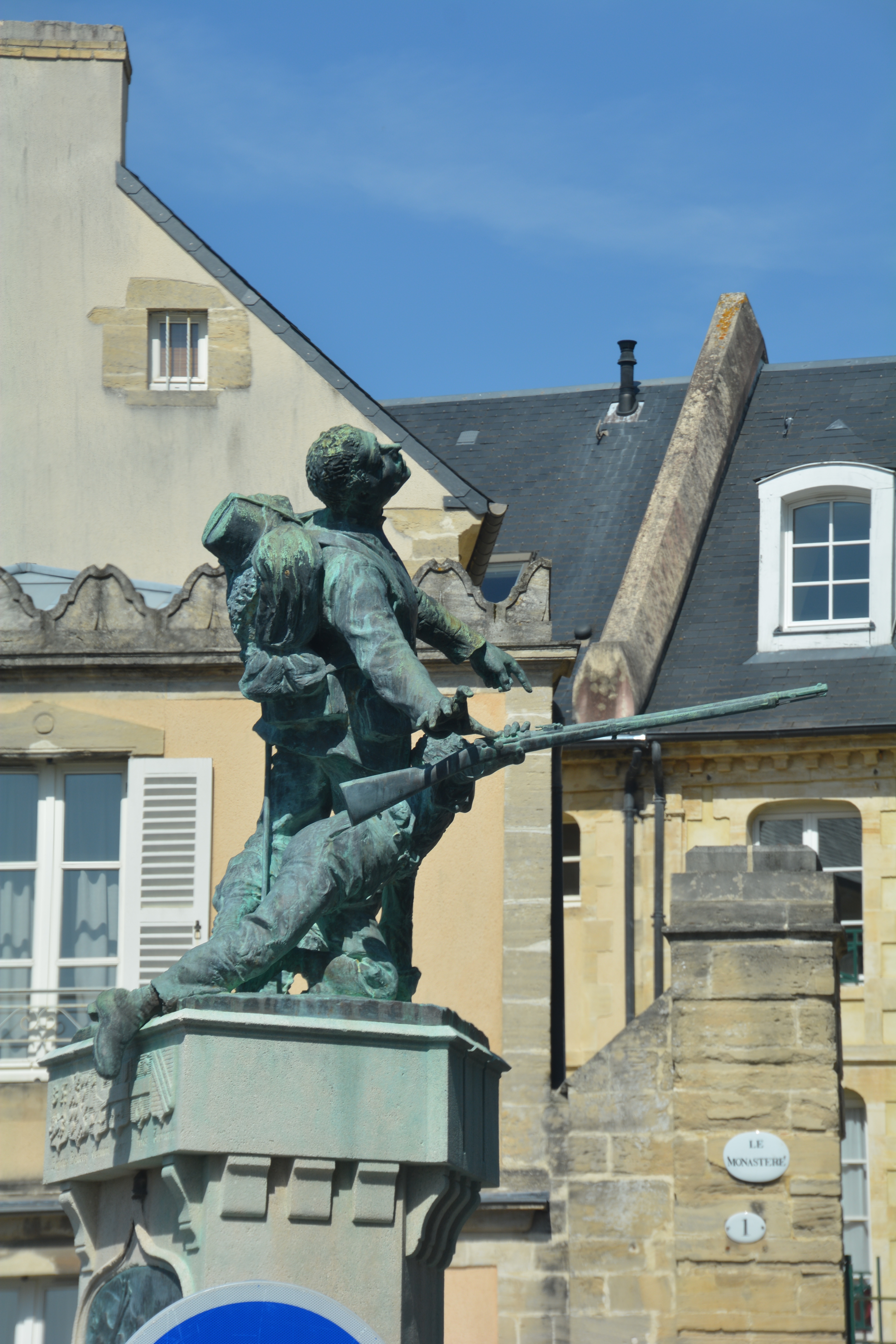
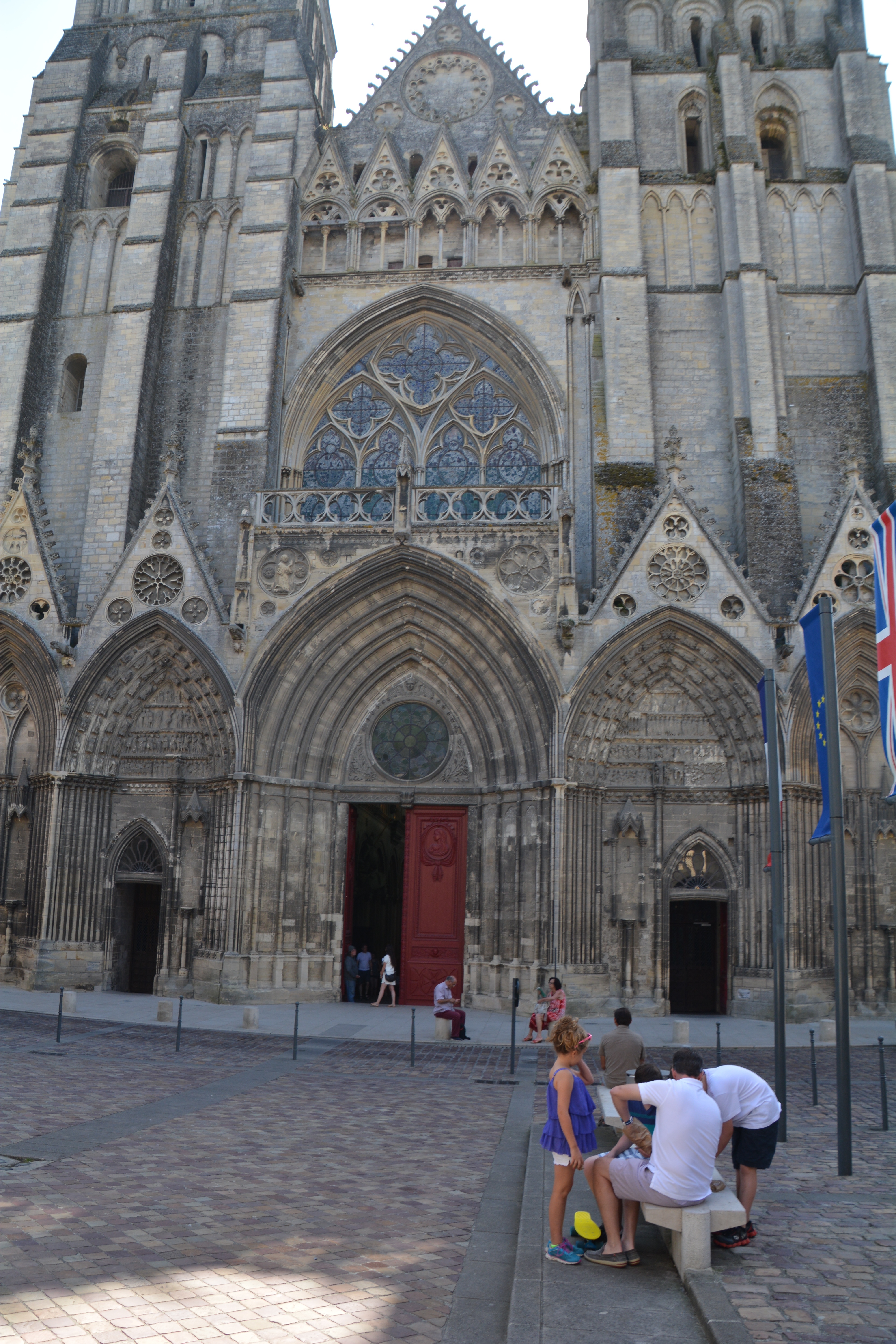
The Cathedral

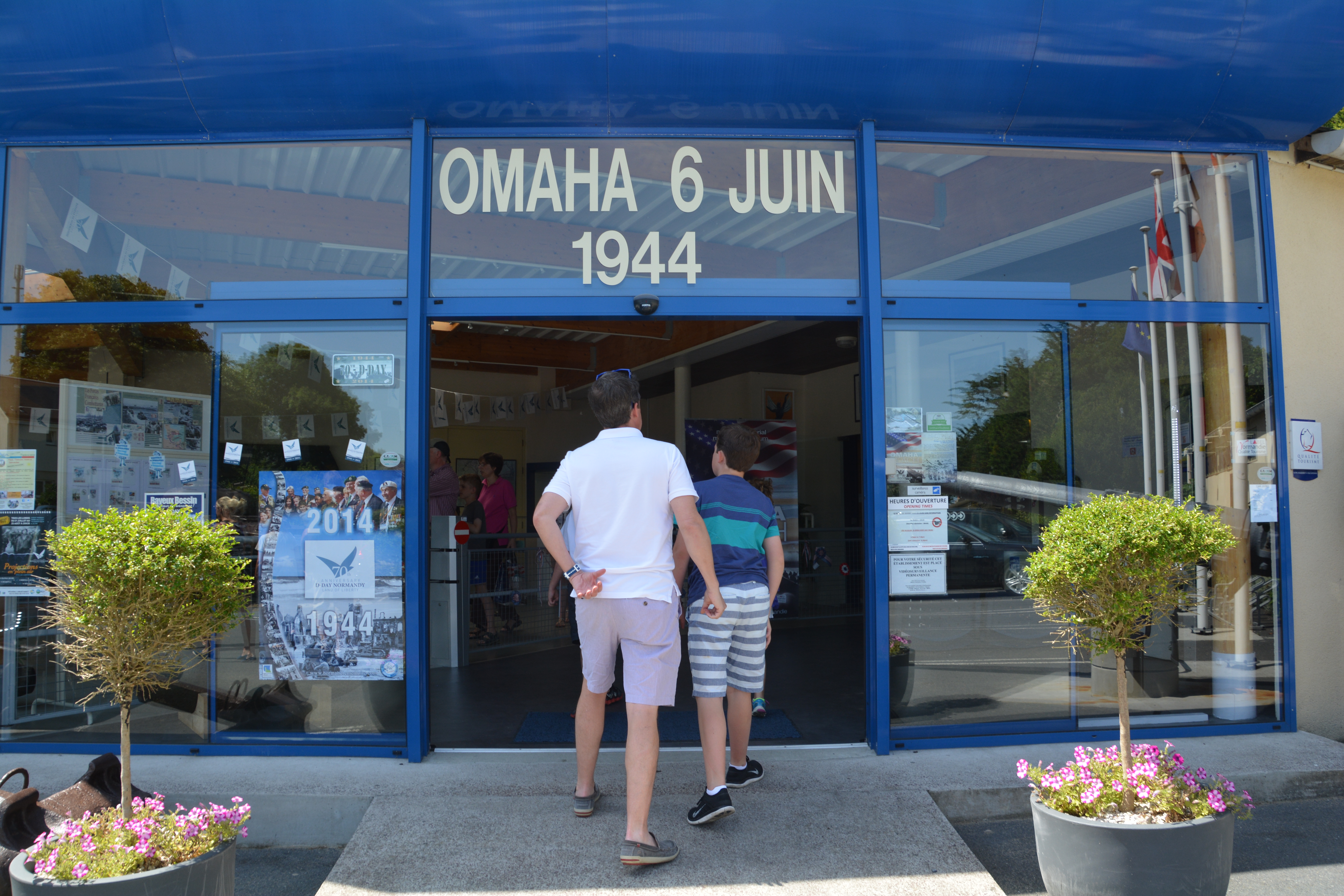
The D-Day Museum
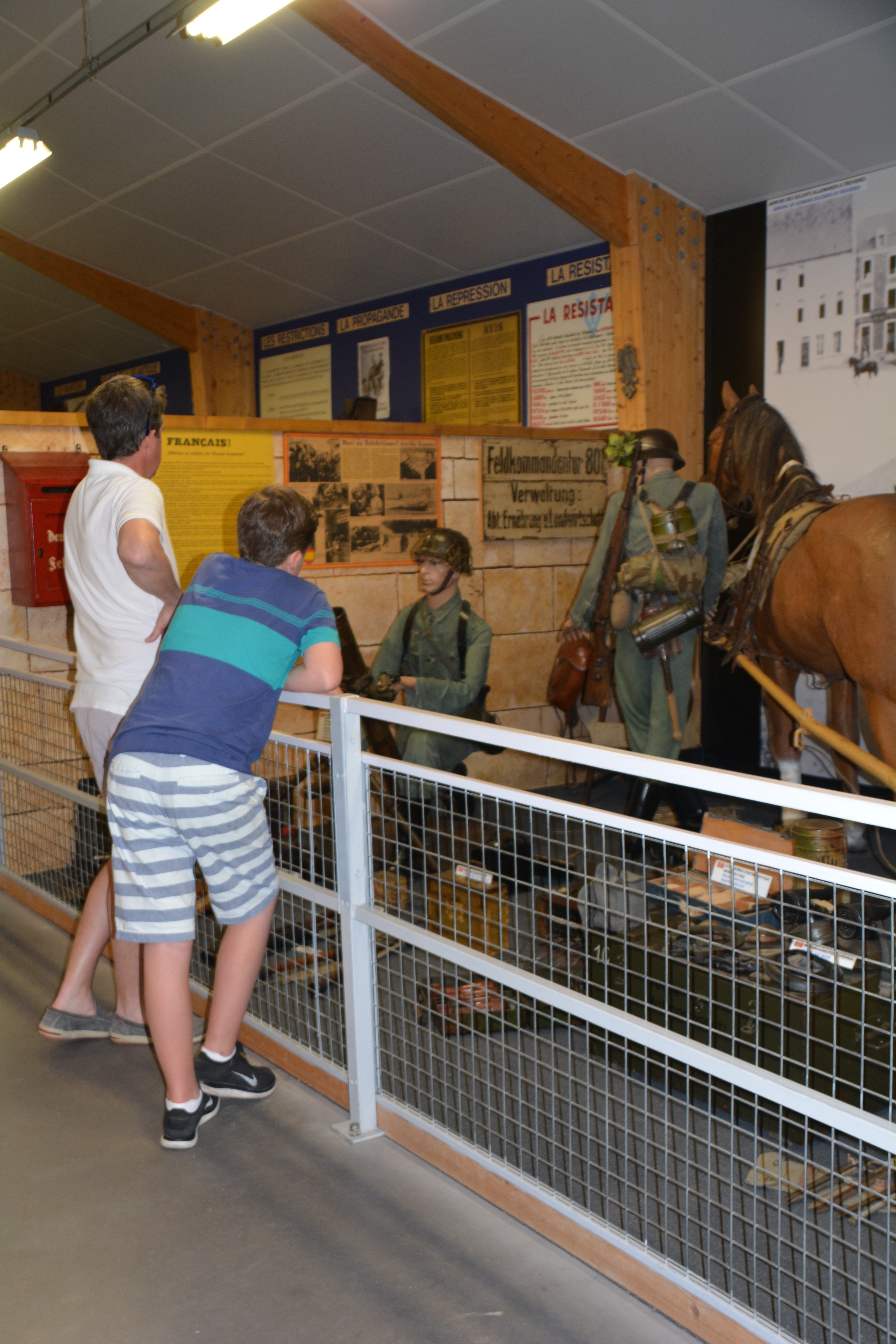
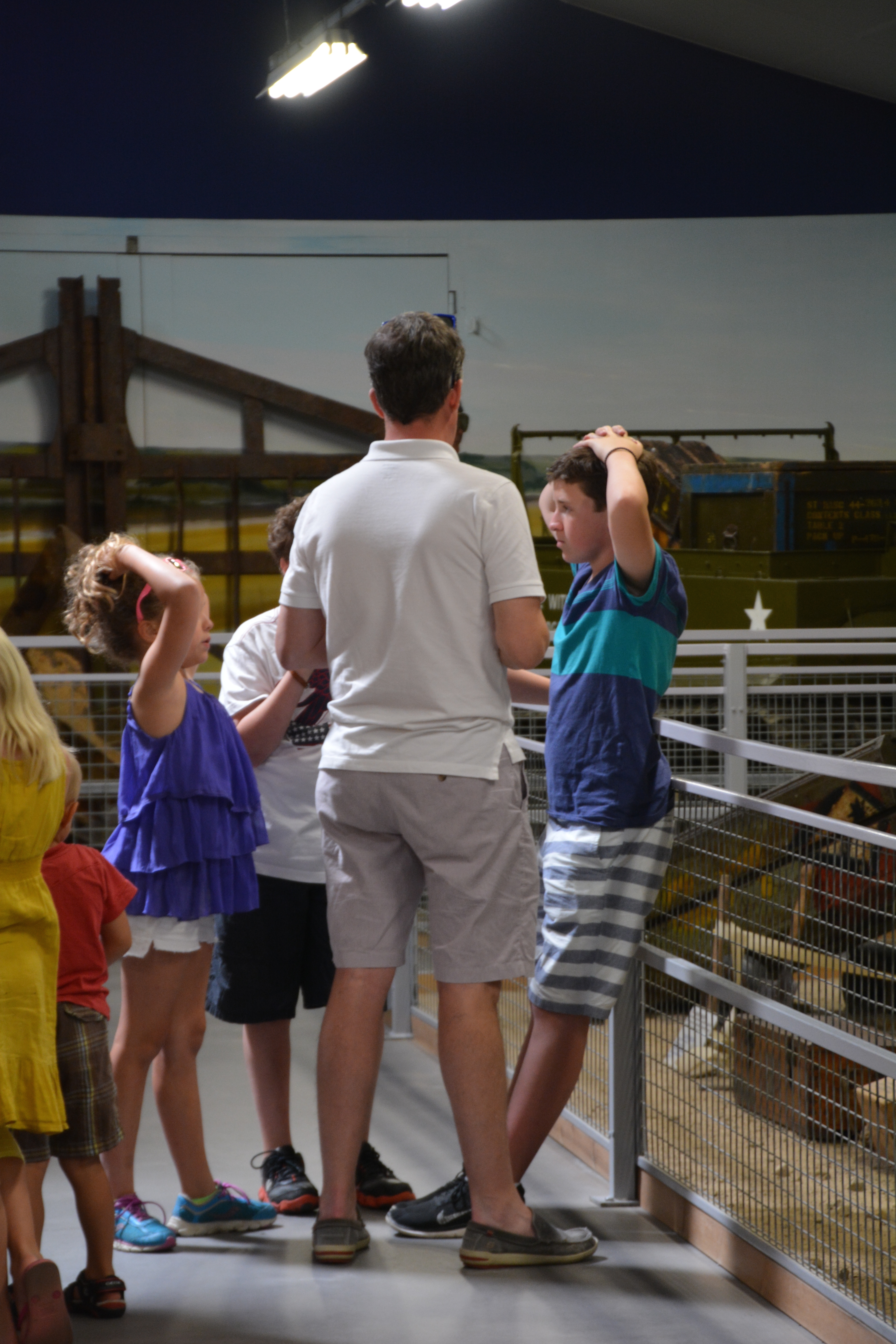
Yet another historical lecture from Dad…..

The forward door from one of the many Allied landing vessels which carried troops to Omaha Beach

A Sherman tank

Omaha Beach
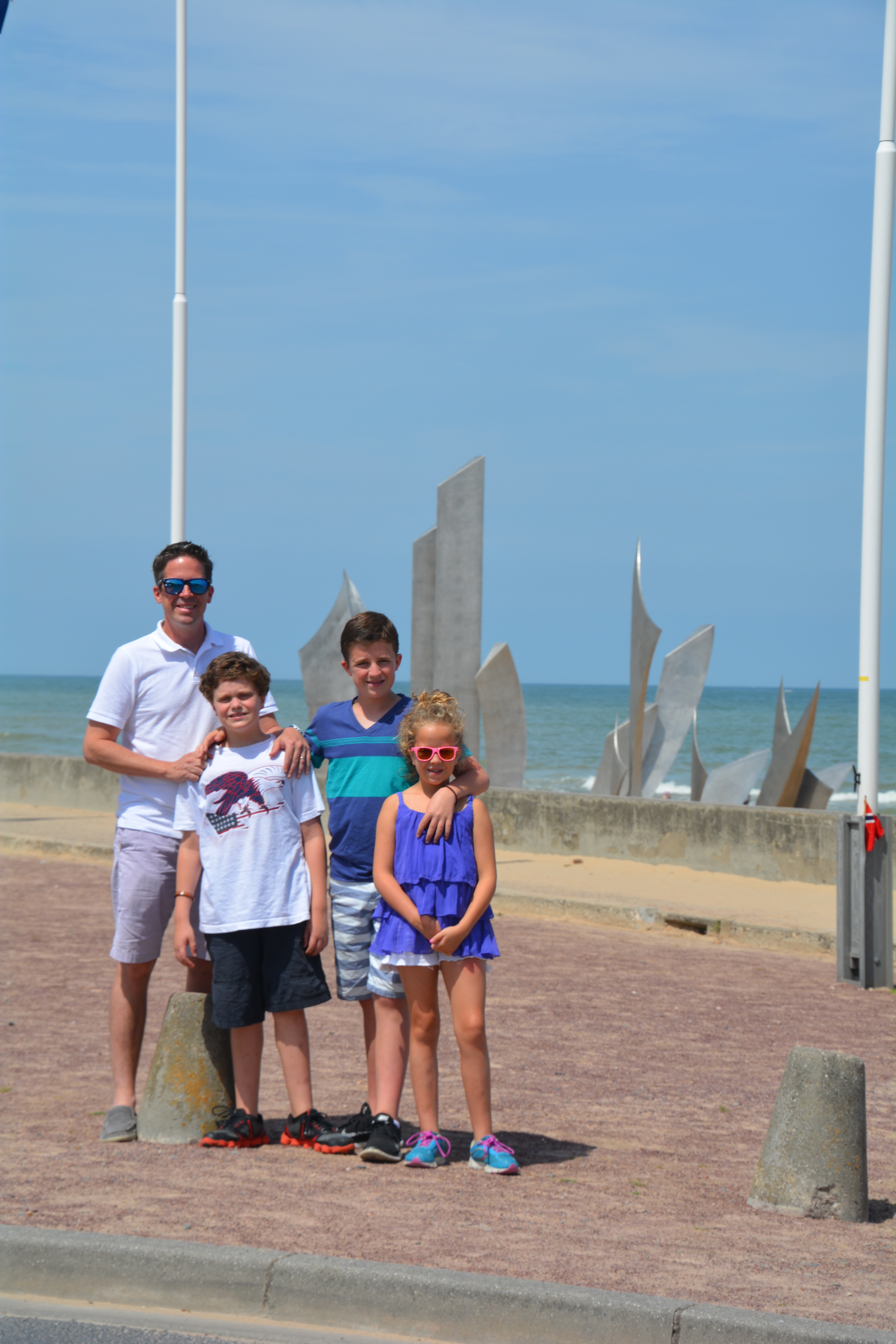


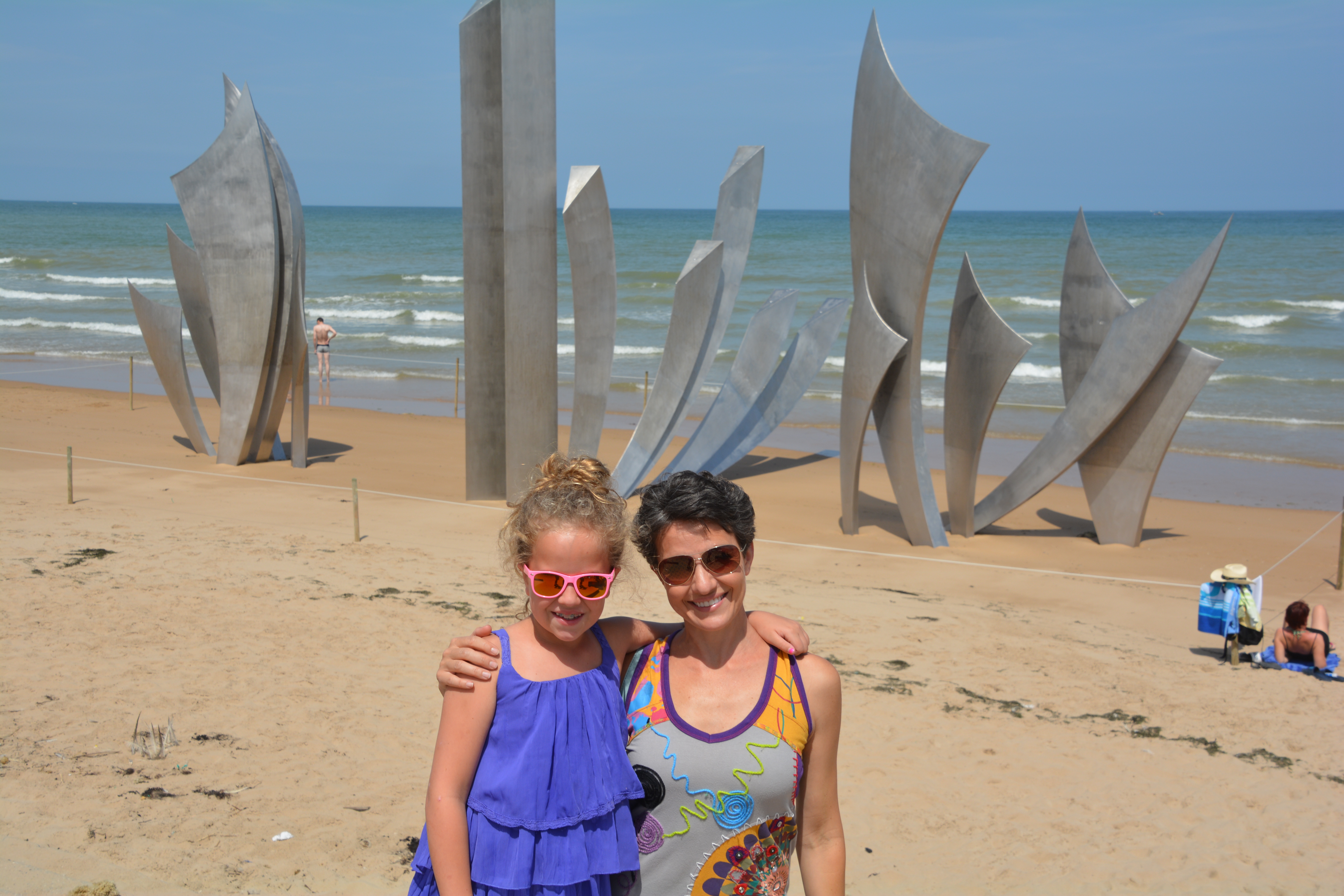
Georgia and LouAnn in front of “Les Braves”, created by French sculptor Anilore Banon to commemorate the 60th anniversary of D-Day in 2004.
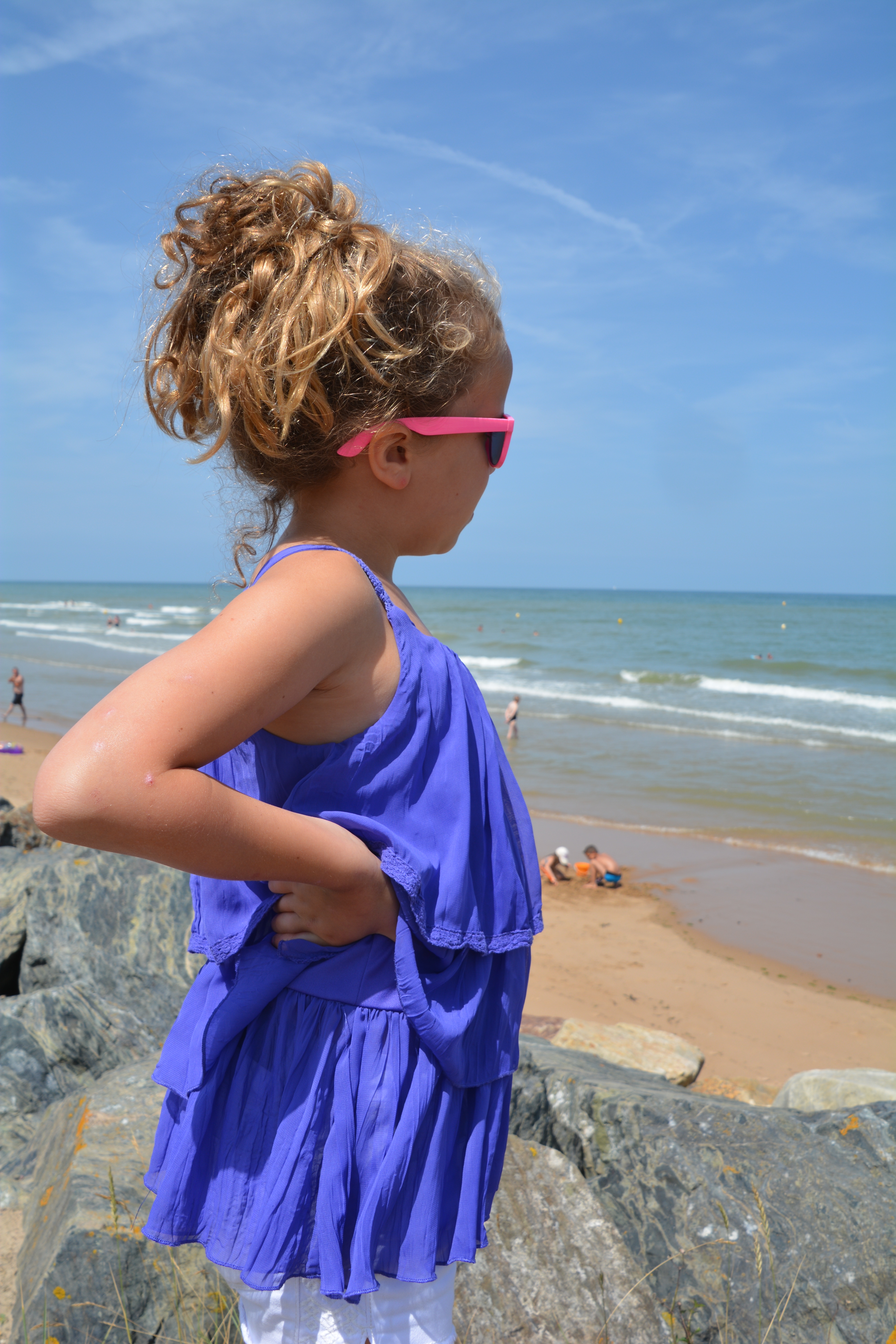
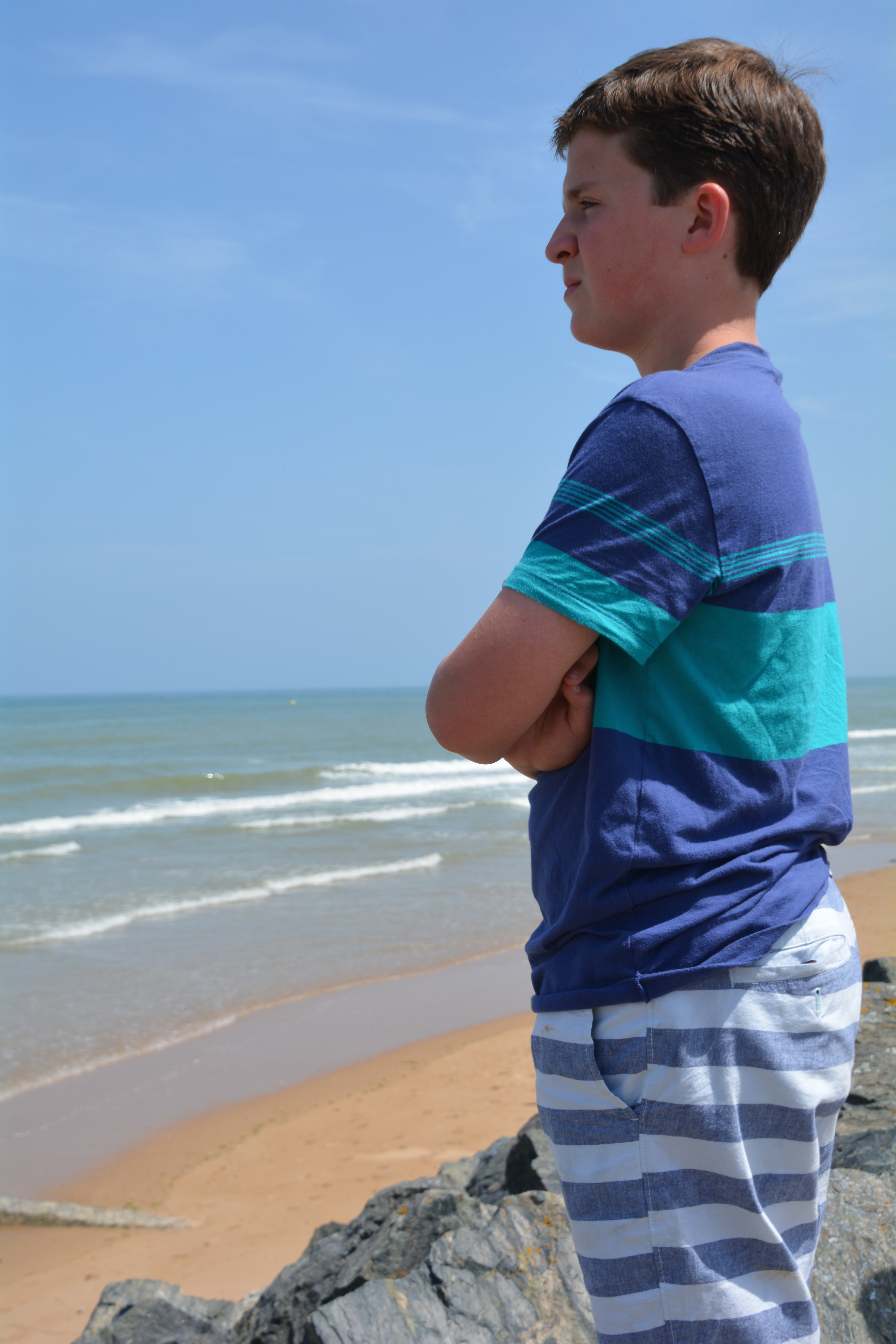
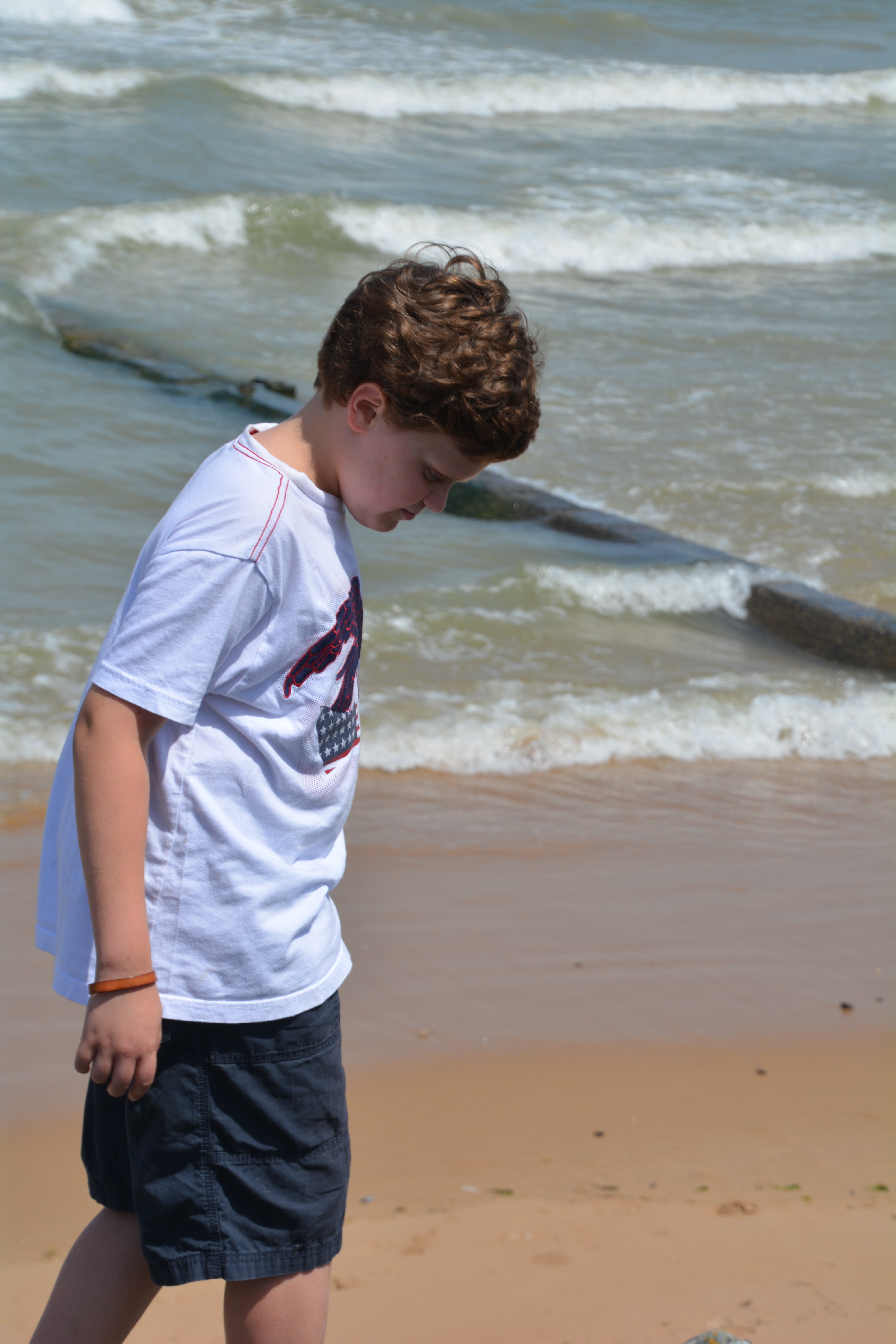


We ate at a beachside cafe, where Georgia had a very American lunch.

Then, back to the beach! The water was COLD, but kids don’t mind.

I did a lot of THIS on Omaha Beach.

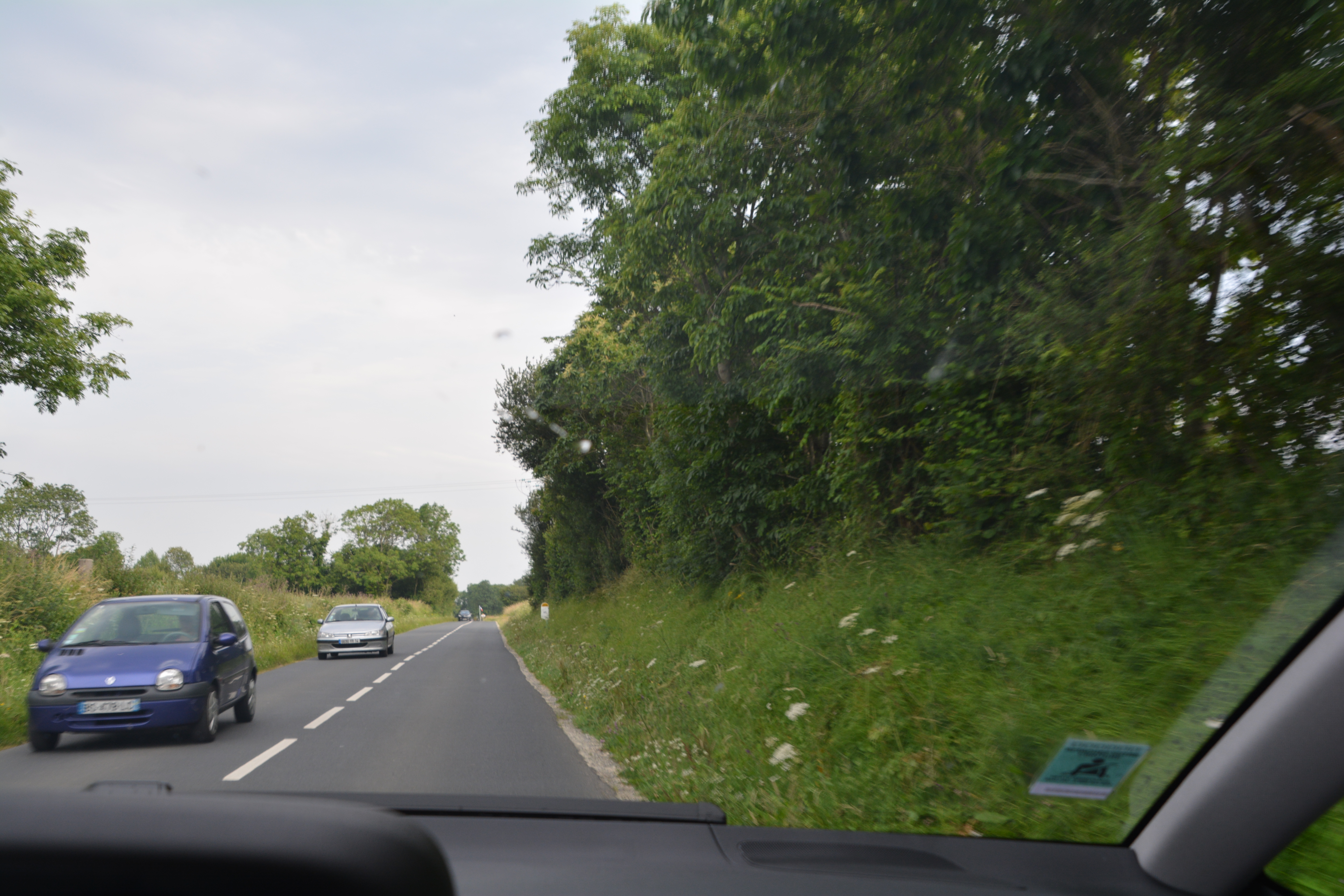
Hedgerows!
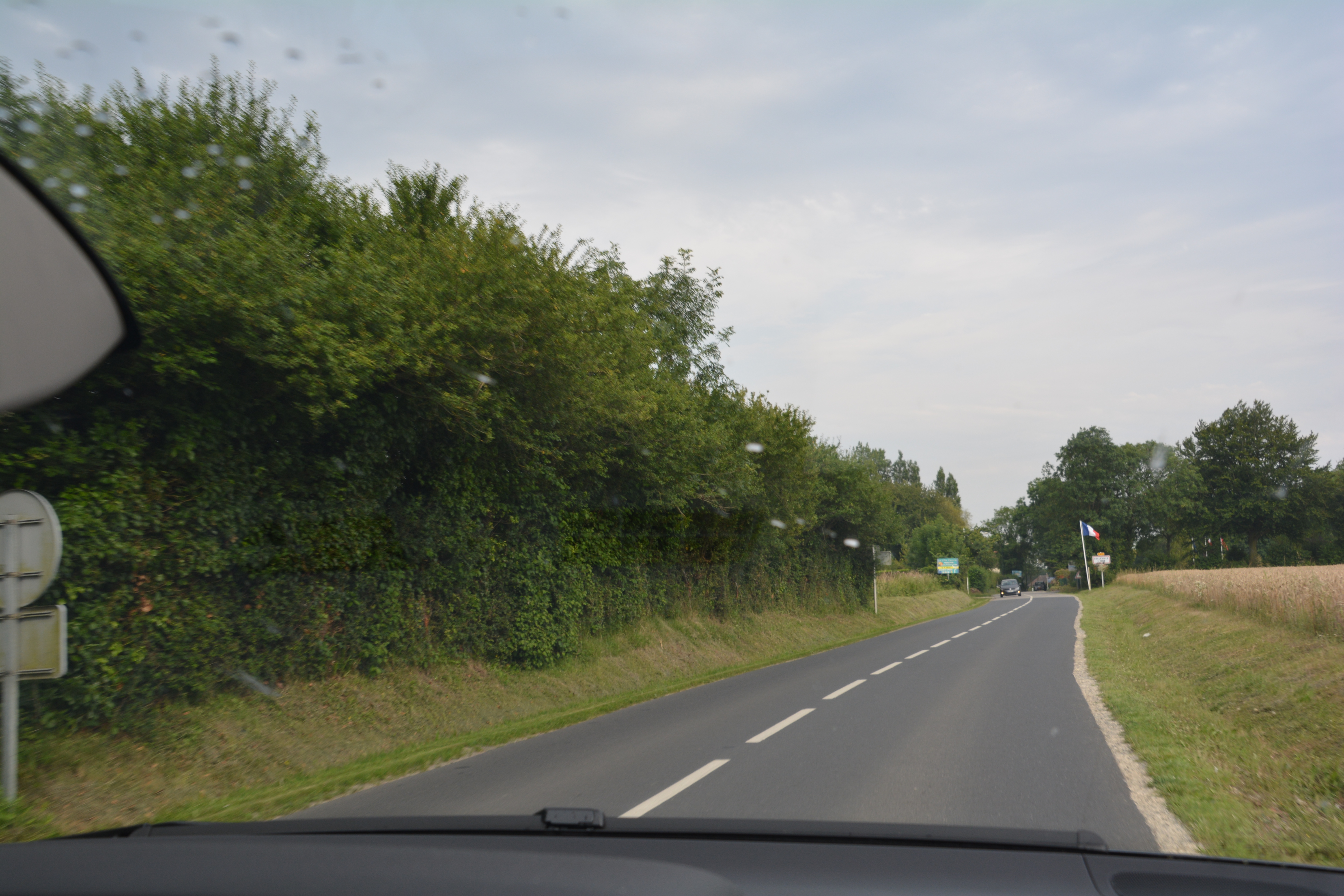
More hedgerows!
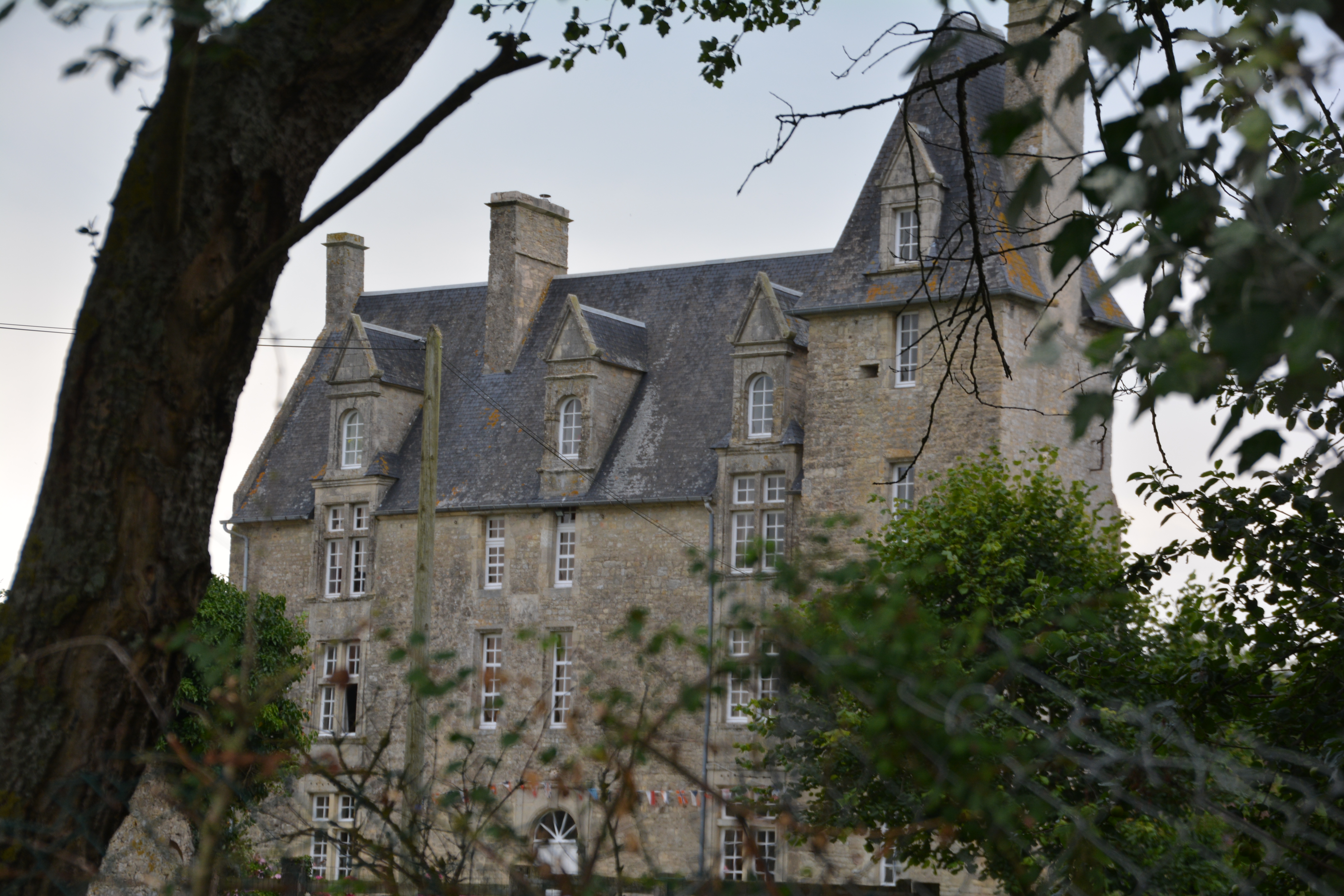
One of many beautiful, ancient estates on the way to Pointe du Hoc.
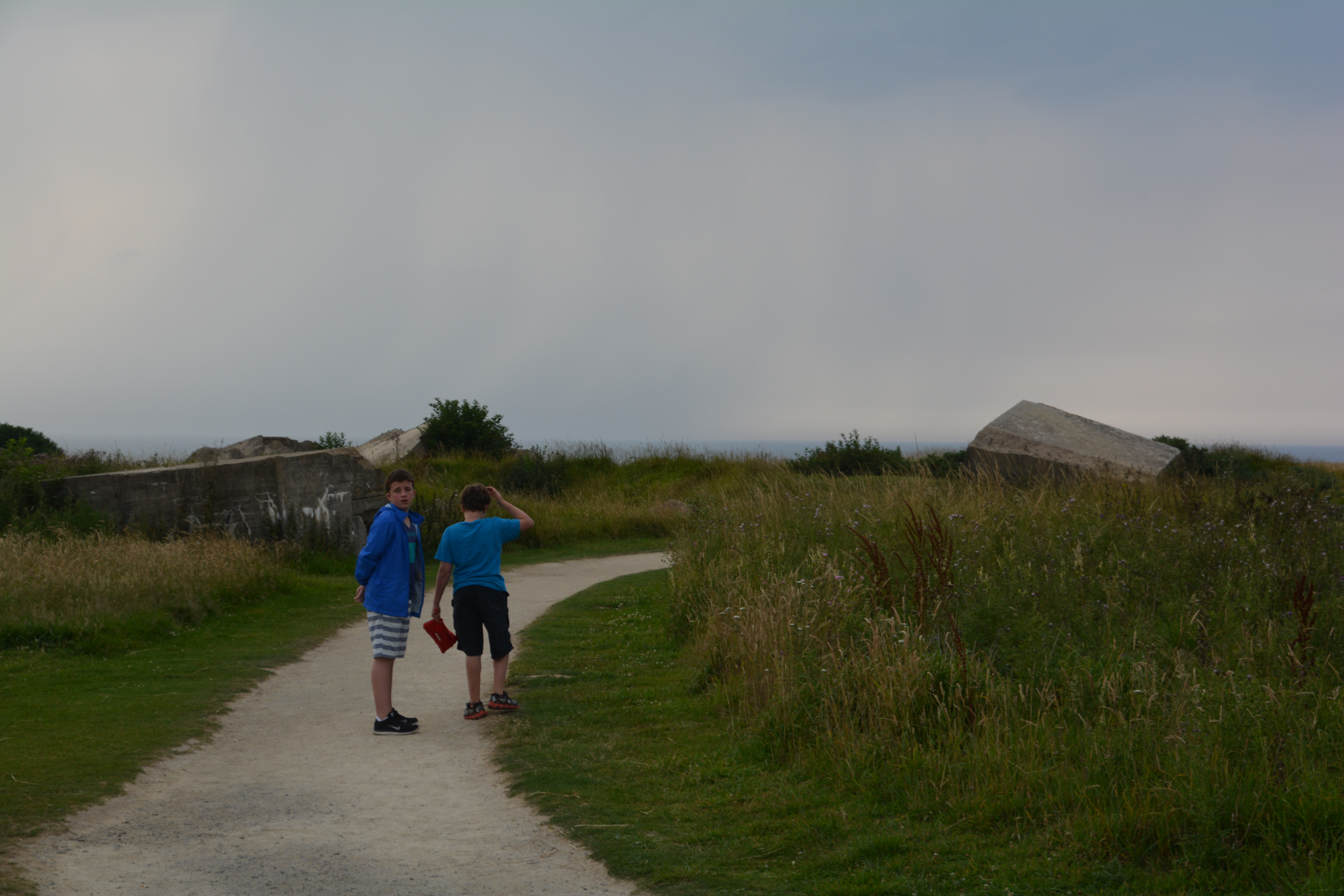
Pointe du Hoc
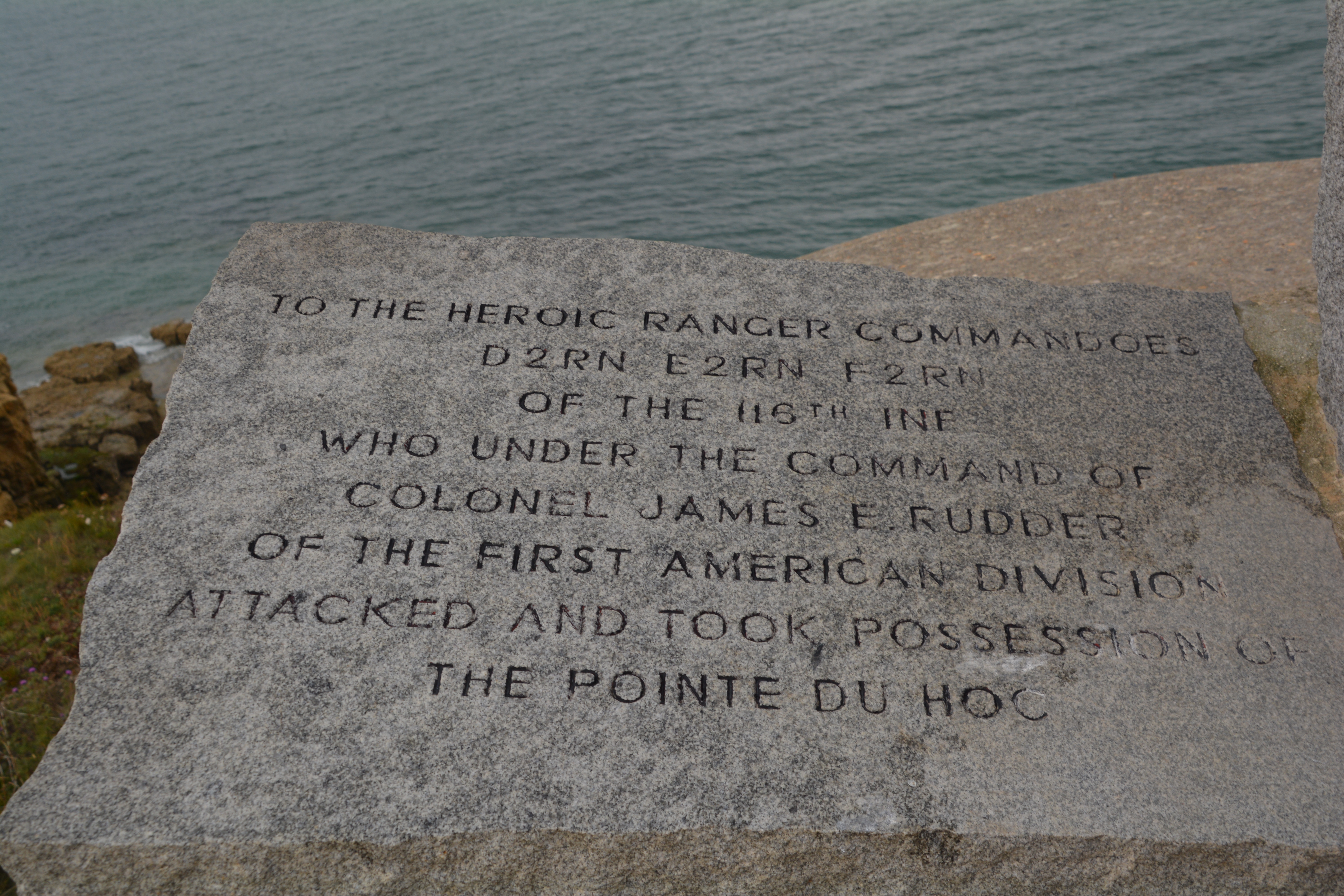
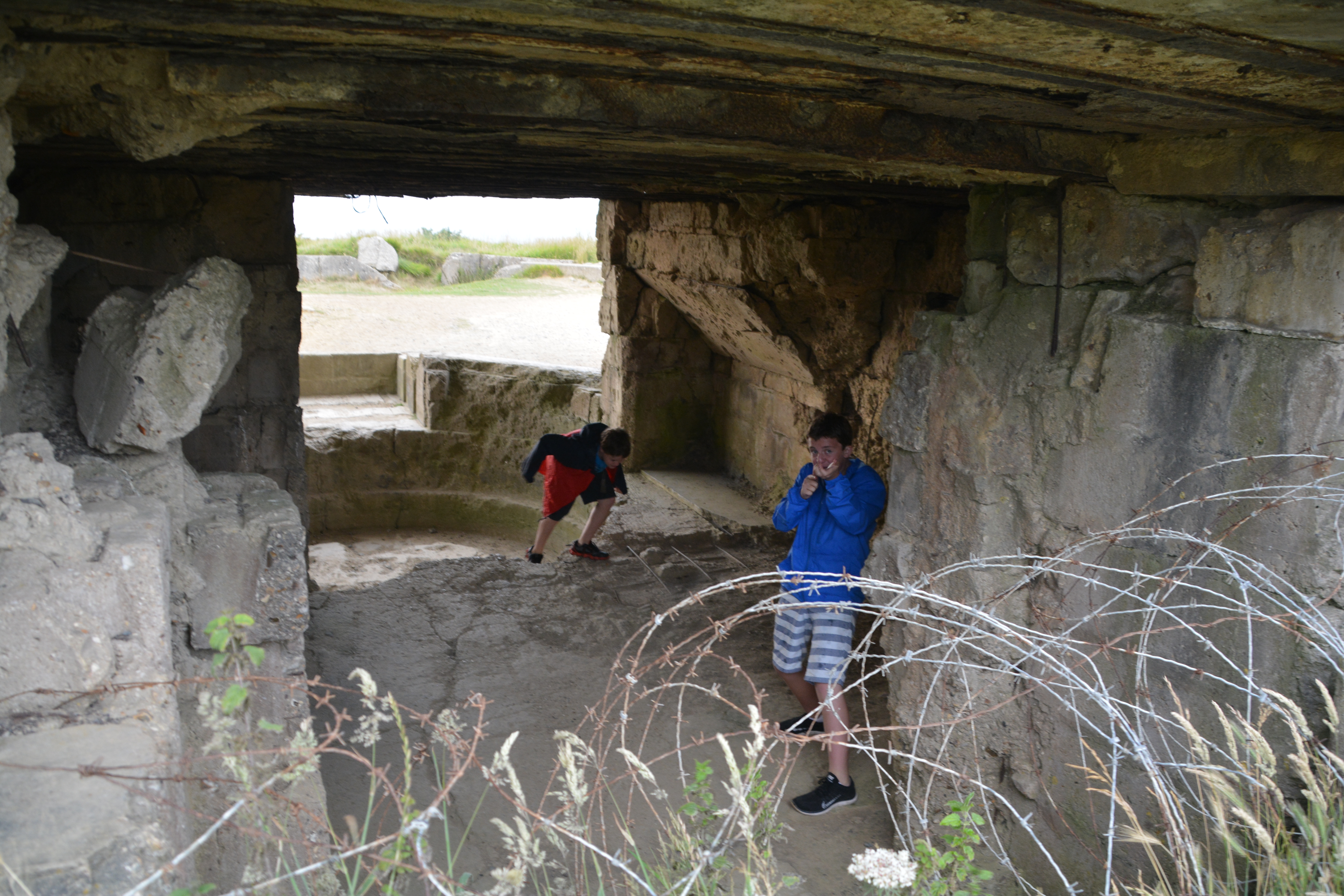
German bunker
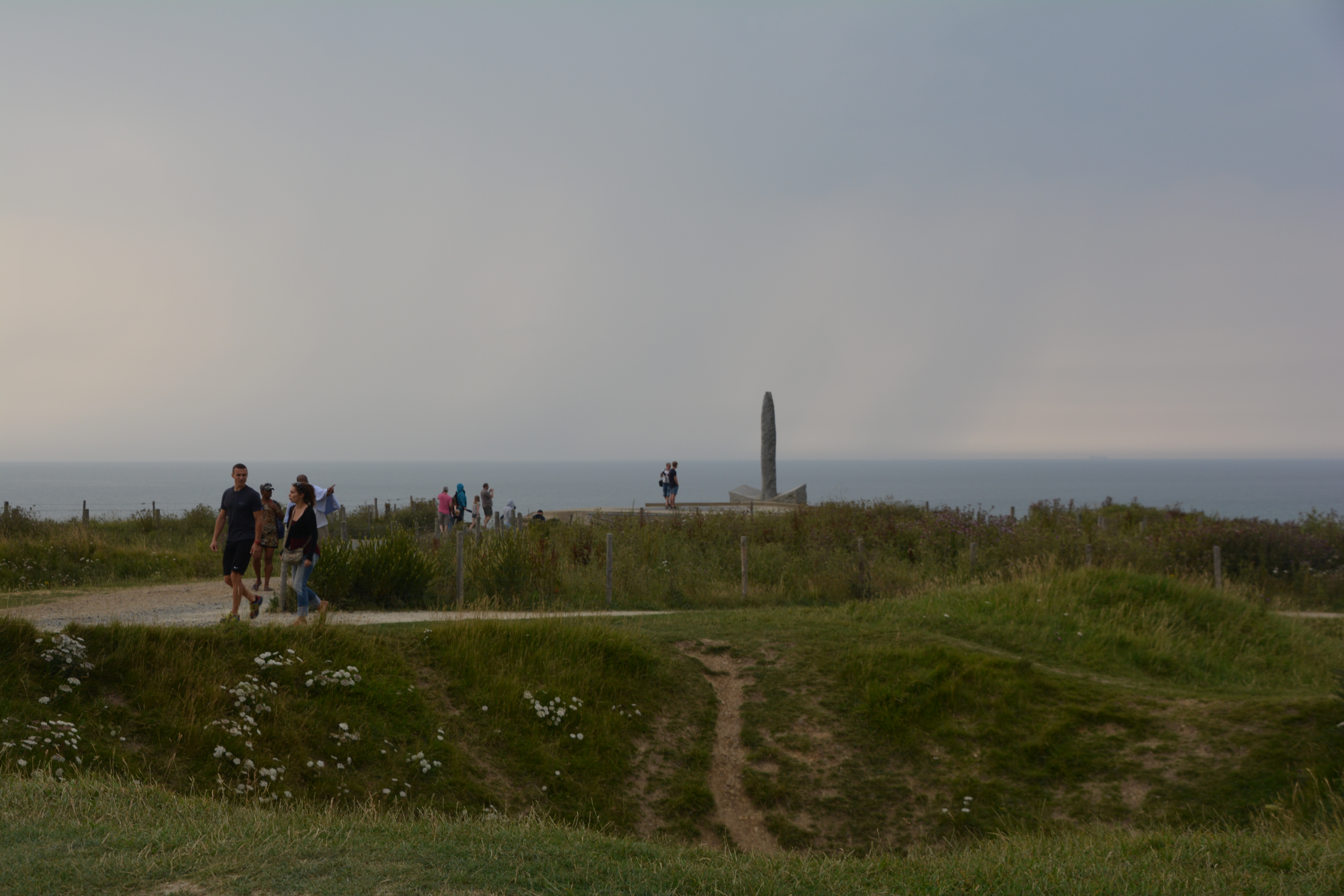
The memorial seen in the distance is at the top of the cliff the Rangers scaled.

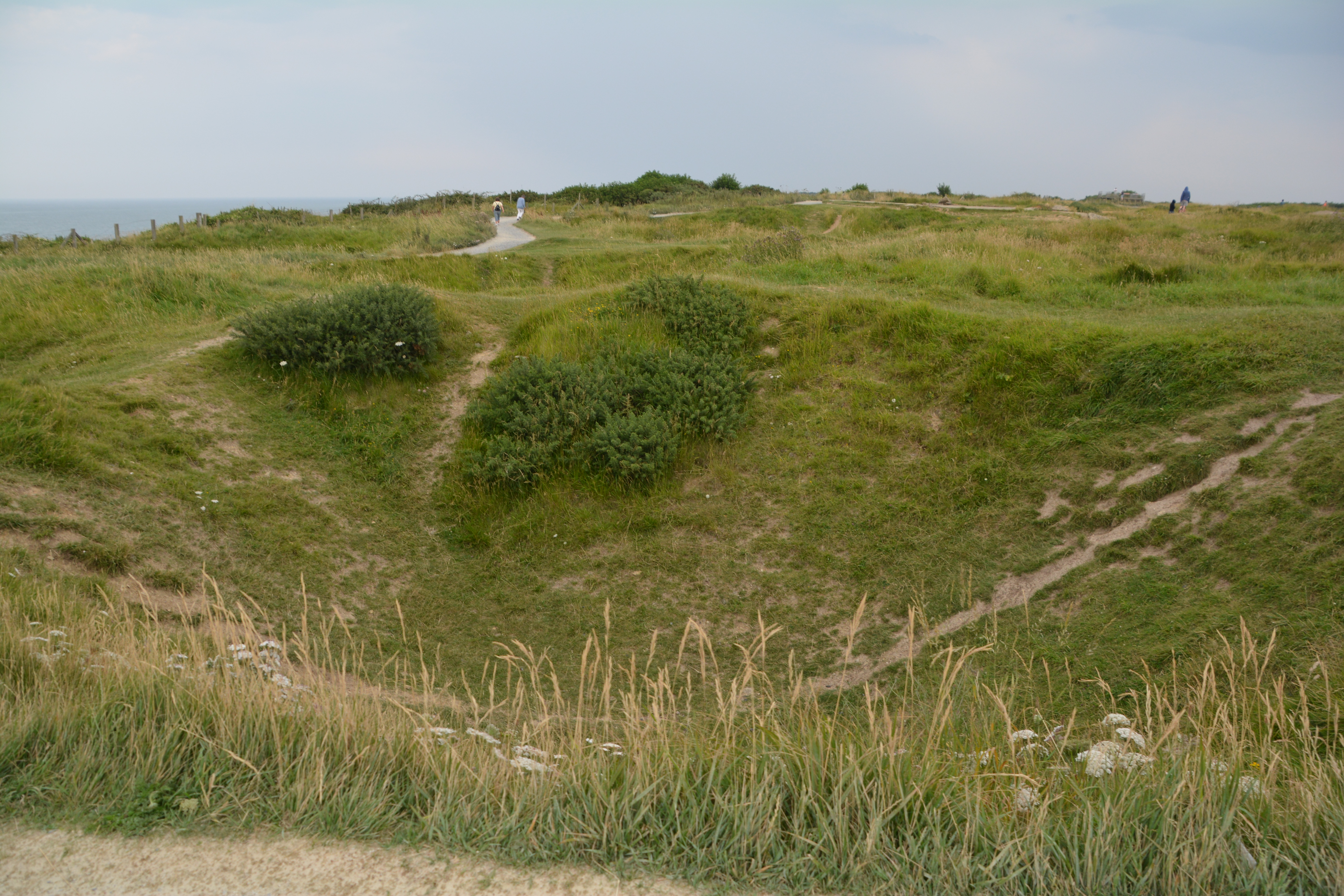
The whole area is still pocked with craters from the Allied aerial bombing.
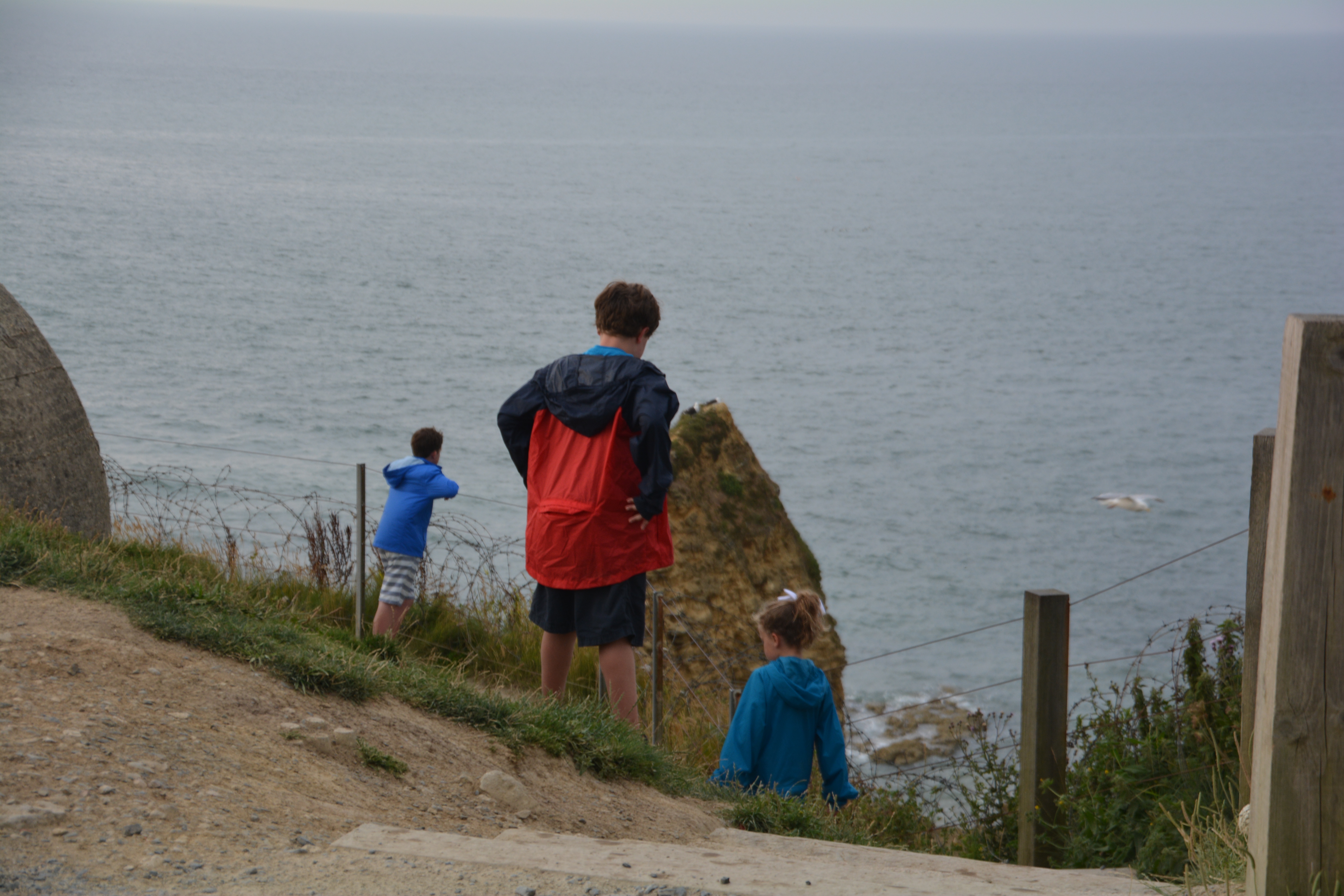
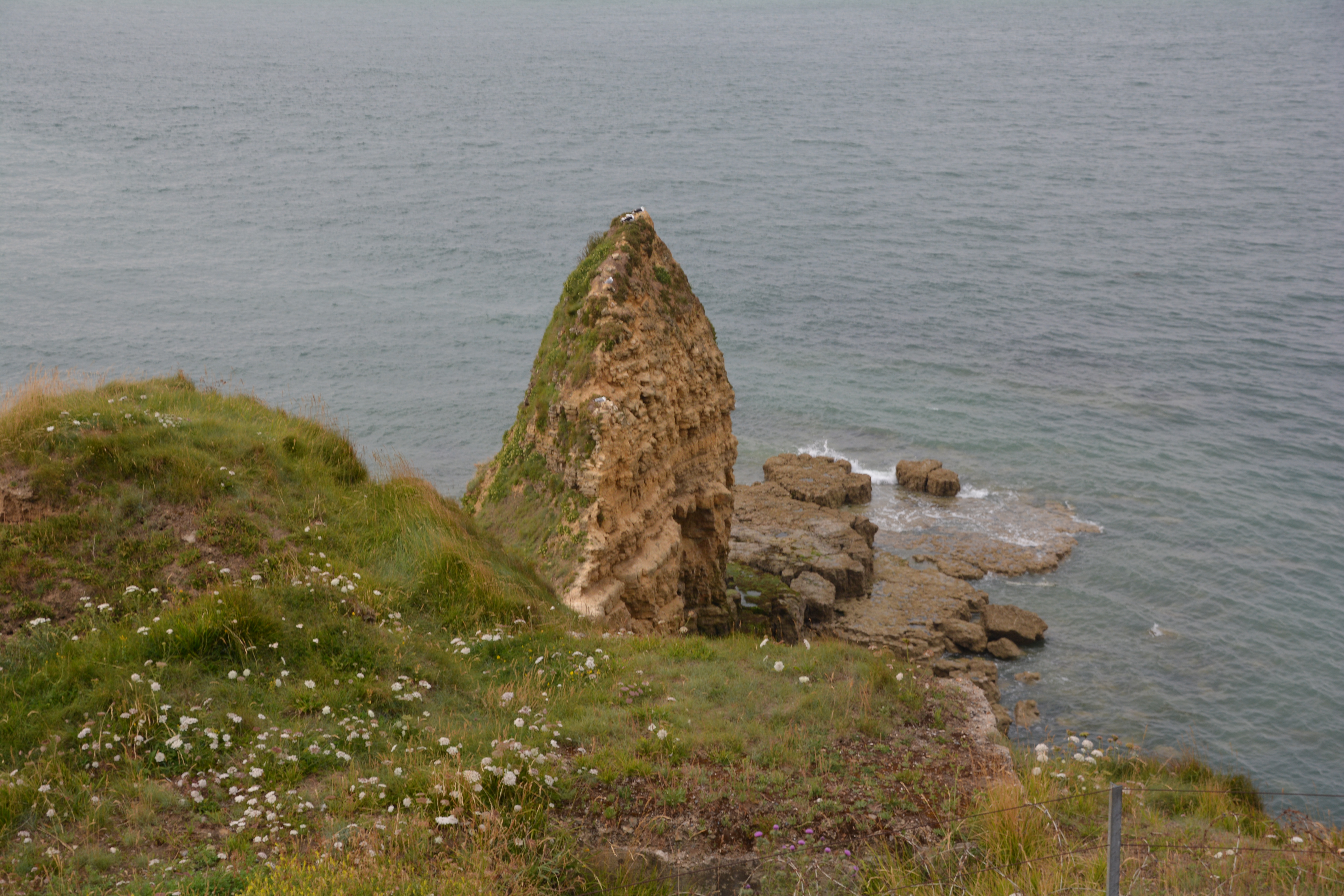
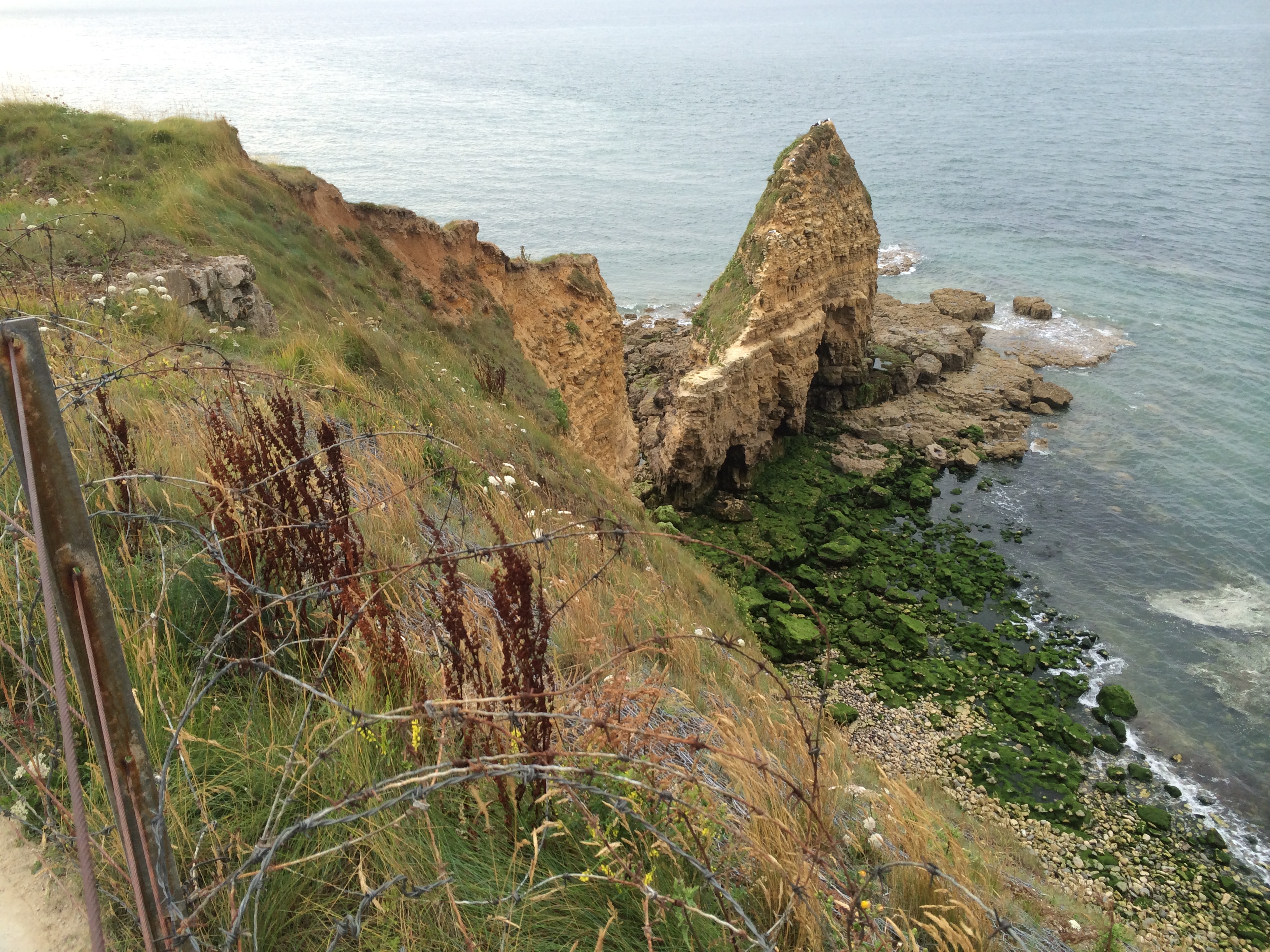
Looking down to the stretch of beach where the Rangers began their climb.

Ellis trying to escape from his bunker!
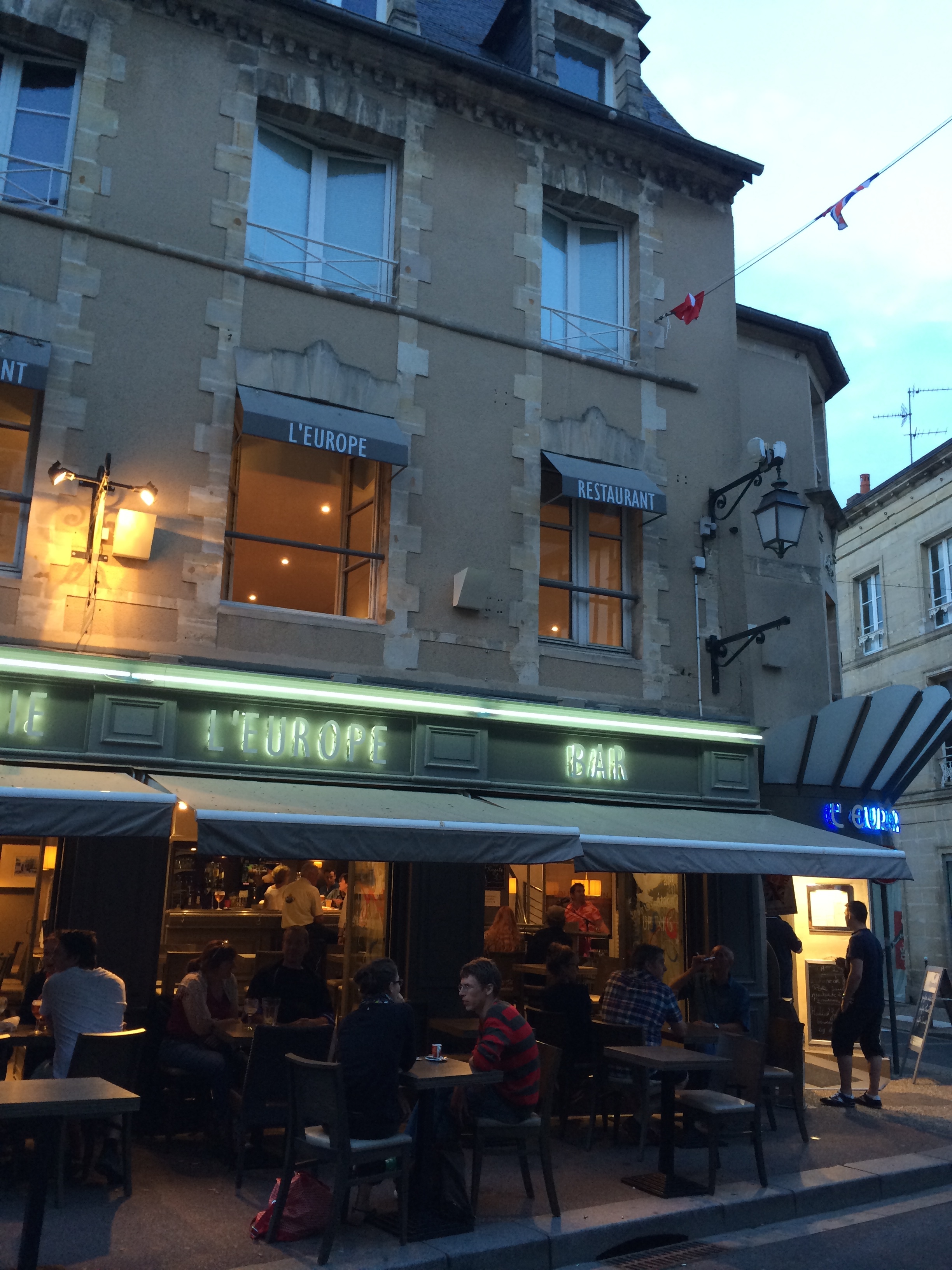
Our dinner spot back in Bayeux.
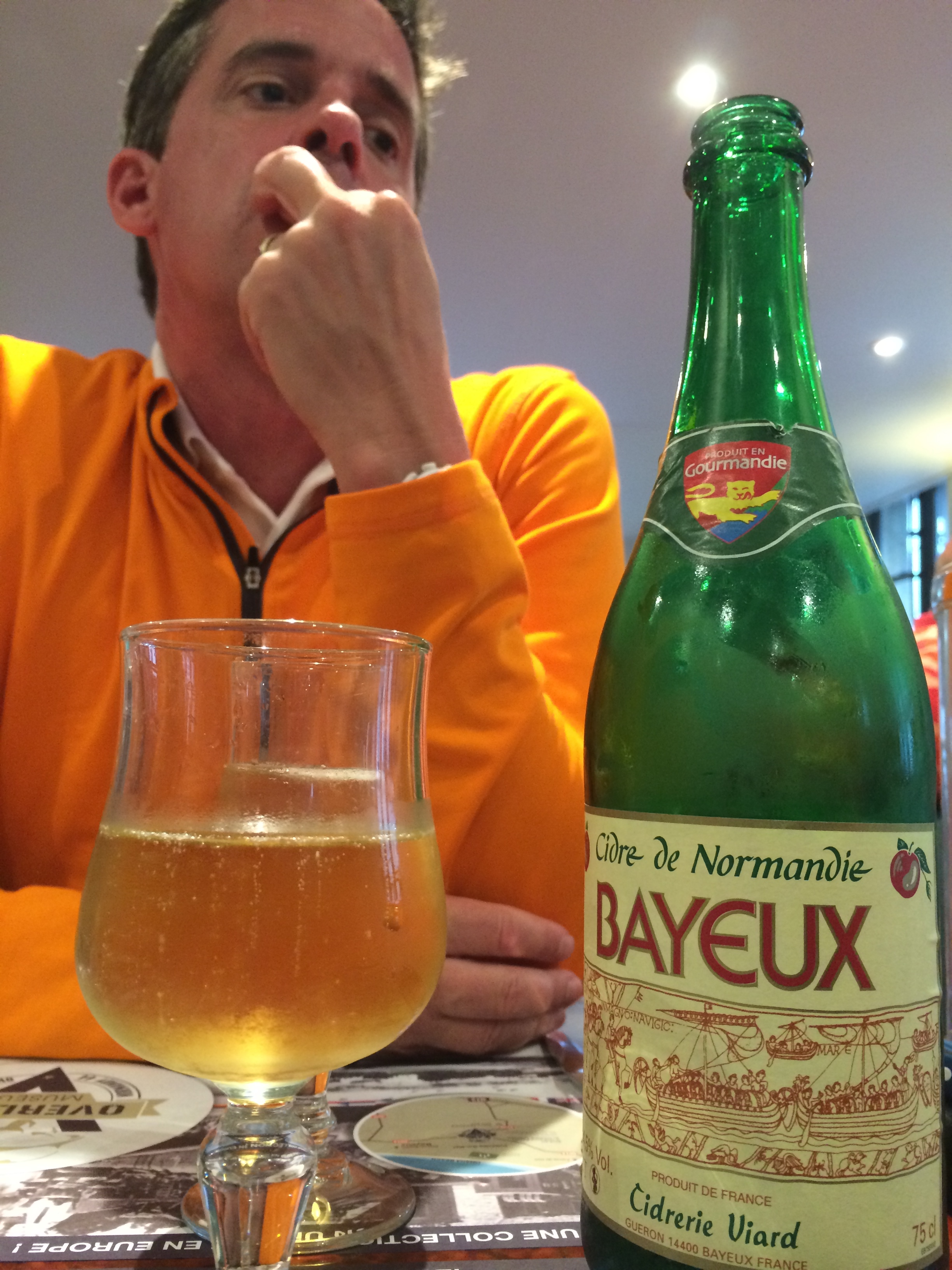
WONDERFUL cider…..
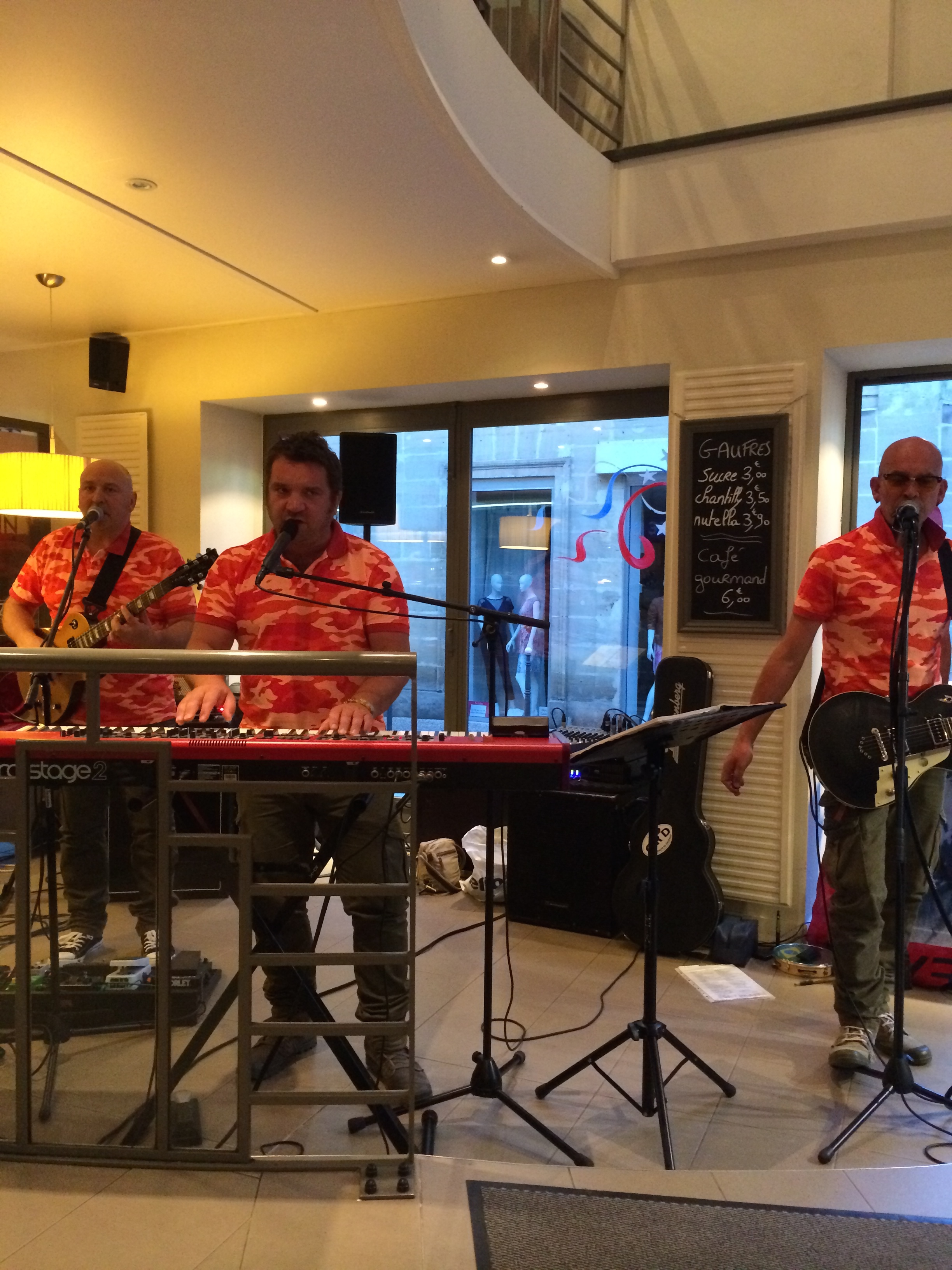
Tekila, the “latin reggae” band!
 Stumbo Adventure